
The pattern was terrifying.
2014, Nantes and Dijon. One dead, twenty-two injured.
2016, Berlin. Twelve dead, fifty injured.
2018, Strasbourg. Five dead, eleven injured.
2020, Trier. Five dead, fifteen injured.
2024, Magdeburg. Five dead, more than two hundred injured.
2017, Potsdam could have happened, hadn’t the police found the van loaded with explosives just in time.
All attackers were Islamists extremists.
Christmas Markets – the quintessential community gatherings for one of Christianity’s largest holidays draw huge numbers of people every year (mostly Christians, of course) – with that, unfortunately making them targets to terrorists.
But politicians arrived at the wrong conclusions.
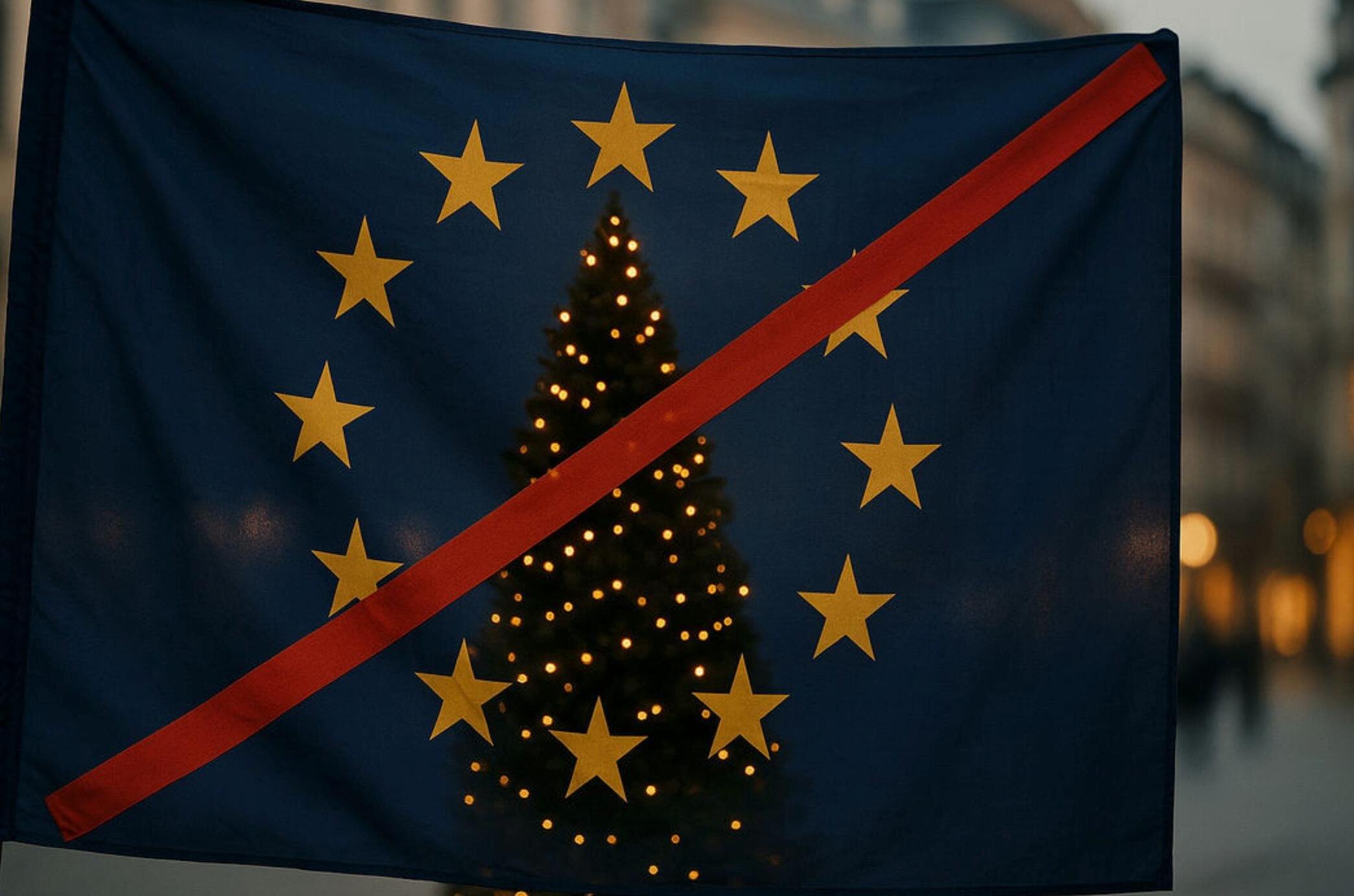
It started in 2021, with the Commission’s botched plan to banish Christmas from its communication. Dubbed as the ‘European Commission Guidelines for Inclusive Communication’, the set of recommendations included EU employees to refrain from phrases like ‘the Christmas season can be stressful’ or to use ‘generic names’ instead of ‘Christian names’ when not referring to specific individuals.
After an outcry from Vatican (among others), the document was eventually withdrawn. The Commission vehemently denied that Cardinal Pietro Parolin was right when he accused the EU of ‘trying to cancel our roots’, forgetting that ‘one of the main influencers, if not the main one, was Christianity itself’ in shaping European values.
Then last year, local authorities in London made it into the headlines by banning the word ‘Christmas’, re-christening Christmas markets into ‘Winter-Come-Together’-s or simply ‘winter markets’.
Officially, they were aiming for ‘inclusivity’, in light of the city’s increasing non-Christian population, but the cost was too high to ignore.
Alas, the trend is obvious: in a misguided attempt of ‘appraisal’ and ‘appeasing’, Christian holidays are sanitized and marginalized (completely ignoring the fact that Islamic or other religious traditions are celebrated openly, and without much effort to turn them into ‘inclusive events’).
The threat of Islamist extremism is real – but is truly banning Christianity the answer?
Rather than cherishing and promoting the roots of European culture?
Or rather than admitting that those extremist sentiments, nurtured by uncontrolled immigration grew to a level when it endangers the everyday citizen’s most solemn moments?
The Christmas Market in Magdeburg was reopened again this year (about the same time as the perpetrator, Saudi doctor Taleb al-Abdulmohsen stood trial) – but with heavily reinforced security. Authorities spend at least EUR 250,000 in new defence structures, including giant concrete blocks meant to stop cars from ramming into the crowd.
Such blocks became a fixed feature of many such gatherings around Europe, yet people still need to attend a Christmas Market looking over their shoulders, guessing whether security is enough or what else the terrorists came up with.
AI generated videos on social media encourage people to wear bulletproof vests to protect themselves, as if living in an active war zone.
Not the perfect way to get into Christmas mood.


