
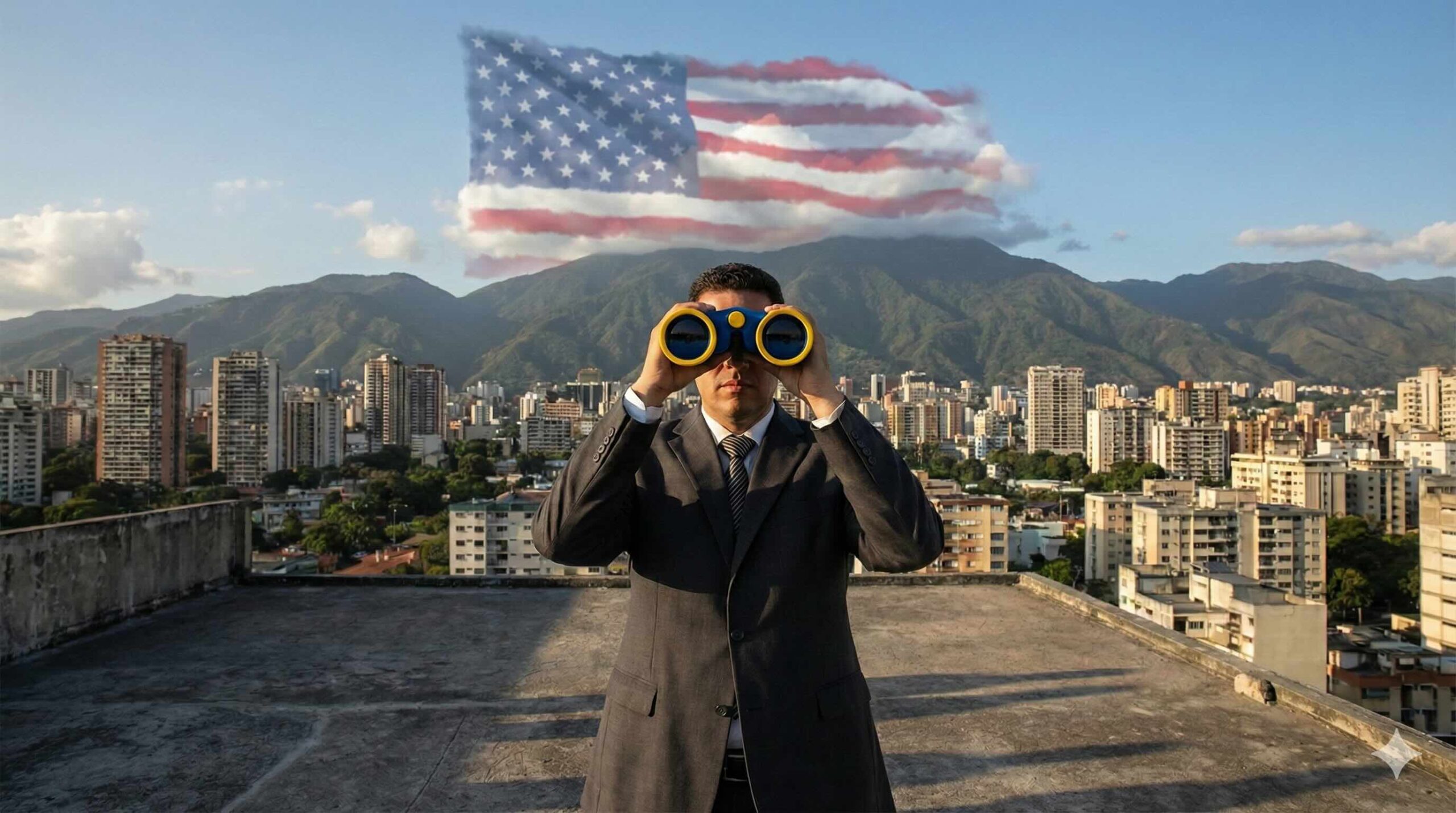
Given the EU’s nineteen sanction packages imposed on Russia in response to Moscow’s ’military operation’, i.e. full-scale war against Ukraine, the question of whether the block is going to hit US companies with sanctions after Washington’s military intervention in Venezuela – something that has not been seen in Latin America since the Cold War – , seems both quite logical and absurd at the same time.
The question of sanctions makes sense considering that, with the extraordinary military operation dubbed Operation Absolute Resolve conducted by the United States’ armed forces in Caracas which led to the capture of President Maduro and his wife, Washington clearly violated both international law and the principles of territorial integrity and sovereignty. This may be the moment when Western Europe realizes that the US has abandoned the core values that united them for the past century, Chatham House’s International Law Programme’s leader pointed out adding that the US capture of Maduro and attacks on Venezuela have no justification in international law. UN Secretary General Antonio Guterres said he was deeply concerned that the rules of international law have not been respected. He also stressed he was afraid that the US operation set a dangerous precedent.
’It was an operation to bring outlaw dictator Nicolás Maduro to justice,’ US President Donald Trump said. It should be noted that, according to international lawyers, the US rejection of Maduro’s legitimacy paves the way for Washington to argue that he does not enjoy sovereign immunity as a head of state in the US domestic courts. In addition, US officials have claimed the operation against Venezuela was justified on the grounds of self-defence, arguing that the government was involved in drug trafficking.
Given Brussels biased approach to sanctions and the EU’s chronic reluctance to act, no one can seriously expect any serious European measures to be taken against the US, even if Washington indeed violeted international law. It should also be noted that the narco-terrorism conspiracy does indeed appear to be a cleverly designed pretext for raiding Venezuela, which is hard to criticise on moral grounds. To date, the EU has only issued a statement by High Representative for Foreign Affairs and Security Policy Kaja Kallas. No further steps are expected to be taken by the EU in this regard.
’The principles of international law must be upheld in Venezuela and the will of the country’s people must be respected’, the EU’s foreign policy chief said in her statement, supported by 26 of the 27 EU nations. ’We stand in solidarity with the Venezuelan people and support a peaceful and democratic transition. Any solution must respect international law and the charter of the United Nations,’ European Commission president, Ursula von der Leyen said.
Most European leaders do nothing but criticize the United States’ actions, while facing a new world order. At the same time, Donald Trump’s allies in Europe, such as Italy’s Giorgia Meloni, deemed the US operation legitimate, describing it as a ’defensive intervention’. The military intervention’s biggest critic was France as the country’s foreign minister Jean-Noël Barrot stressed that the US operation to capture Maduro ’violates the principle of non-use of force that underpins international law’ while French President Emmanuel Macron said that ’the United States is gradually turning away from some of its allies and breaking free from the international rules that it used to promote.’
However, no matter how harshly President Macron criticizes the US during his annual foreign policy address if the EU as a whole is expected to turn a blind eye to violations of international law. Such a reluctance at EU level, makes it clear that what matters in Brussels is not the mere fact of violation of international law, but the circumstances including the economic power and influence the respective country has in the world, as well as who its leader is. According to Brussels’ policy of double standard, a legal violation cannot be judged in the same way if committed by Putin or Trump.
Add to this the fact that after Russia attacked Ukraine in 2022, the EU agreed to the US demand that the bloc’s countries stop using Russian fossil fuels, supposedly to weaken Russia’s war economy, and replace them with American and other energy recources. However, by agreeing to this request, the EU has in fact disrupted its own economy, making its own situation even more difficult, while failing to deliver the anticipated fatal blow to Russia’s economy.
The EU-26 statement called for a peaceful transition of power in Venezuela, but what if things will not go that smoothly? What will the European Union do then? Will it impose sanctions on the United States and prepare for a phase-out of American energy sources, as it did with Russian ones? The probability of this scenario is very low.
However, if the EU remains silent, this position not only questions the moral foundations of the bloc’s foreign policy, but also reveals its insignificant role in global politics.
’This is peace through strength,’ US Secretary of War Pete Hegseth said when concluding Operation Absolute Resolve. On behalf of the EU, silence has so far remained the only response to his words.
*

