
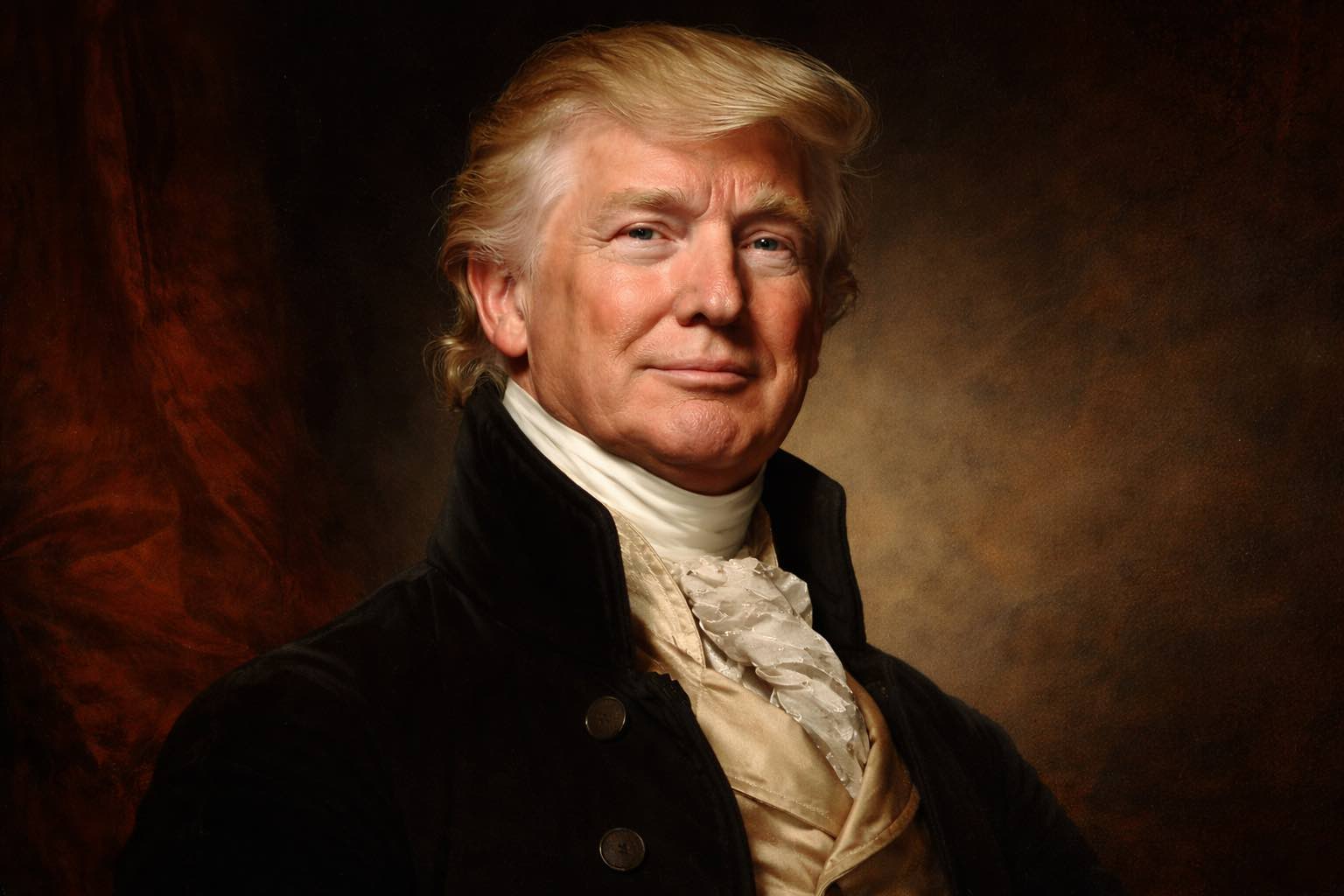
One can mock U.S. President Donald Trump for ‘rebranding’ the (in)famous Monroe Doctrine (the way in which then-president James Monroe defined American dominance in the Western Hemisphere in 1823, declaring the territory off limits to European powers) – even if it wasn’t him, but the New York Post that first used the term on its January 8, 2025 cover.
But it would be foolish and perilous to overlook the implications of this powerful statement.
President Trump didn’t invent the ‘Donroe Doctrine’ after the brazen attack on Venezuela.
It’s been a hot topic for months, especially since the administration has released its renewed national security strategy. But even before that, Trump’s pledges to seize the Panama Canal or Greenland, or his decision to rename the Gulf of Mexico, all pointed in the same direction, along with the tariffs and sanctions carried out in the region in 2025.
Now, in Mar-a-Lago, Trump went further, declaring that ‘we have superseded it [the Monroe Doctrine] by a lot … American dominance in the Western Hemisphere will never be questioned again’.
The ‘Trump Corollary’ as it is called alternatively (mirroring the ‘Roosevelt Corollary’ from the early 20th century, that established the U.S.’ right to intervene in the same area would something threaten American dominance) is a warning for local strongmen, but also against international initiatives in the U.S.’ perceived sphere of influence, think BRICS.
Venezuela was attacked because, ‘all of these actions were in gross violation of the core principles of American foreign policy, dating back more than two centuries’.
Except, of course, for the periods when America felt strong enough to allow some wiggling room to countries on its South, focusing more on democracy and free trade and looking to the side when Beijing or Moscow tried to gain some foothold.
This doesn’t mean, though, that spheres of influence were gone, only, they were reinforced in a more subtle way, using American economic and soft power, sometimes (often) driven by messianic impulse (a.k.a. making the world a better place with spreading American values of liberalism and individualism).
Now, realpolitik and ‘gunboat diplomacy’ is back on the table, promising markets and resources to the (re)emerging pre-eminent regional power.
The message is clear for South America, but should also be for Europe, especially if the latter accepts Washington’s steps without as much as a written protest.
Foreign policy is no longer determined by ‘values’ or ‘friendships’ – the great power competition might be this time between Washington and Beijing, not Moscow, but it’s still all about power, as foreign policy shifts further from multilateralism towards a more confrontational approach.
Instead of relying on the multilateral alliance system built after WWII, American dominance is emphasized, focusing on economic and geopolitical advantages – homo homini lupus est.
Now, with the precedent set by Washington, the dice is cast.
The Russian invasion in Ukraine started with the same rationale, based on historical claims and grievances, along with the claim of Kyiv ‘harbouring Nazis’ – the justification often used by Moscow to defend interventions in its ‘Near Abroad’, especially the post-Soviet states and countries it considers as ‘naturally falling within its sphere of influence due to historical, cultural, and security reasons’.
No wonder that Russian philosopher Alexander Dugin was quick to write about a ‘Eurasian Monroe Doctrine’, declaring that ‘international law no longer exists’ and it shall be rewritten by the ‘victors among the great powers’.
Beijing, if it ever wants, can come up with a similar set of claims against Taiwan in any given moment.
As the new American national security puts more emphasis on the home and near-home front, other regional powers can also focus on their own spheres of influence.
Both Moscow and Beijing will find their South American interests under pressure (in many cases, under attack) and will need to re-evaluate their presence there, maybe refocusing elsewhere.
That leaves no place for value-based, and ideology driven foreign politics, so much favoured by the EU today.
Unless Europe can conjure some trick from its sleeves that can channel the world back to multilateralism, there is only one way forward: if it still wishes to have a seat at the table, this is the last moment to define its clear geopolitical, strategic and economic interests.


