
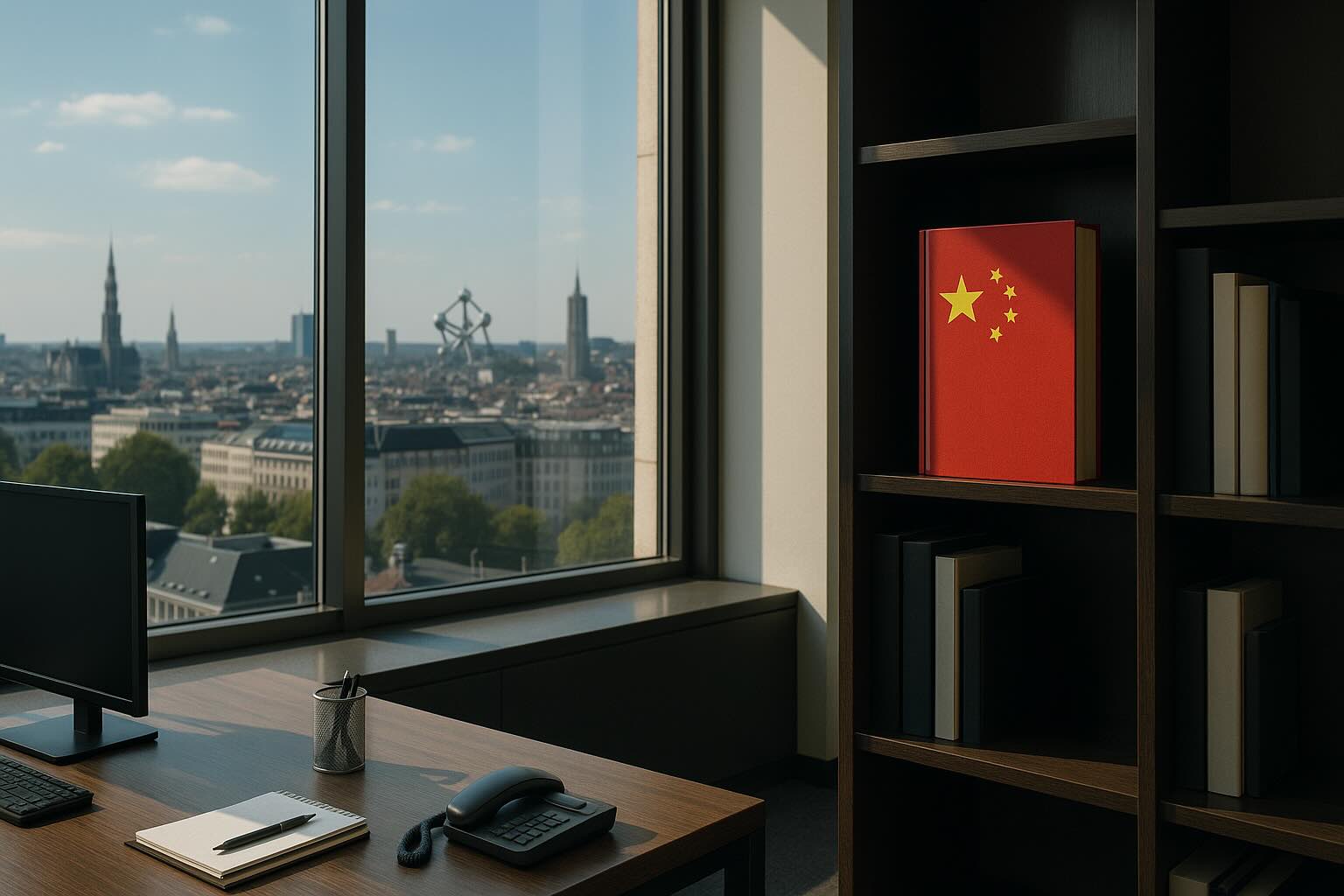
He who knows his enemy and himself well will not be defeated easily.
There’s a plethora of things the EU should or could learn from China, but it could maybe start with the adage of (General) Sun Tzu.
For the last decade or so, the West was convinced that China will never reach the level of modern economies – that it was and will remain a follower forever, competing through cost advantages and dumping cheap, low-quality products on the market. In 2019, after President Trump imposed his many sets of tariffs on Chinese products, analysts assumed that the country would need about 15 years to overcome the negative effects.
They were all wrong.
Blinded by the (self-assumed) superiority, let it be moral, legal or technological, the EU failed to see that China has changed.
While the Old World was busy creating a regulatory framework almost impossible to navigate and a bureaucracy that makes even a snail seem to travel at the speed of light, Beijing chose a different path.
Instead of stifling innovation and creativity at every possible turn, China quietly built an engineering and scientific power hub. A global innovation powerhouse, driven partially by the state itself – something that makes eurocrats and laissez faire, laissez passer liberals cringe, yet seems an efficient means to give that push to pricey research.
The effects already show: China is no longer a follower, but the one who sets the trends, let it be about AI-supported air– or anti-submarine defence systems, microchips, or renewables.
And it’s not happening in 15 years, or whatever new deadline the European Commission sets in the latest framework, white paper or initiative.
It’s happening right now.
China is winning the tech war on many fronts against the U.S., while Europe has been left far behind. And it’s not just AI and information technology. Pharmaceuticals, car manufacturing and wind power are also dominated by Asian giants.
Europe faces two choices.
One is to continue walking the current path: introducing even more controls, regulations, and impossible requirements, preferably scattered through many industrial sectors, perpetuating the cycle of lagging behind. German economy is stumbling, France is stagnant at best, while industrial investors are avoiding the rest of Europe like the plague thanks to the bureaucratic quagmire imposed on all EU member states.
All in the name of moral superiority.
The other option would be realizing that strategic realities changed and returning to a more realistic approach to science, innovation and funding.
Instead of wasting hundreds of hours of fruitless negotiations to create a regulatory framework for AI (that, by the way, will very likely be obsolete the moment of its creation due to the speed things change in the field), embrace technology and support these fast-emerging fields with as much money as possible.
Ironically, here, too, the once-leader is forced the follow the footsteps of the once-follower and get inspiration from Beijing on how to handle AI: how and when regulate or allow free flight. Beijing has had AI specific regulations since 2022, after all.
Unless European policymakers wake up and seek measures to balance Chinese advances, the companies of the continent won’t have a standing chance to withstand the power of Chinese tech-giants.


