
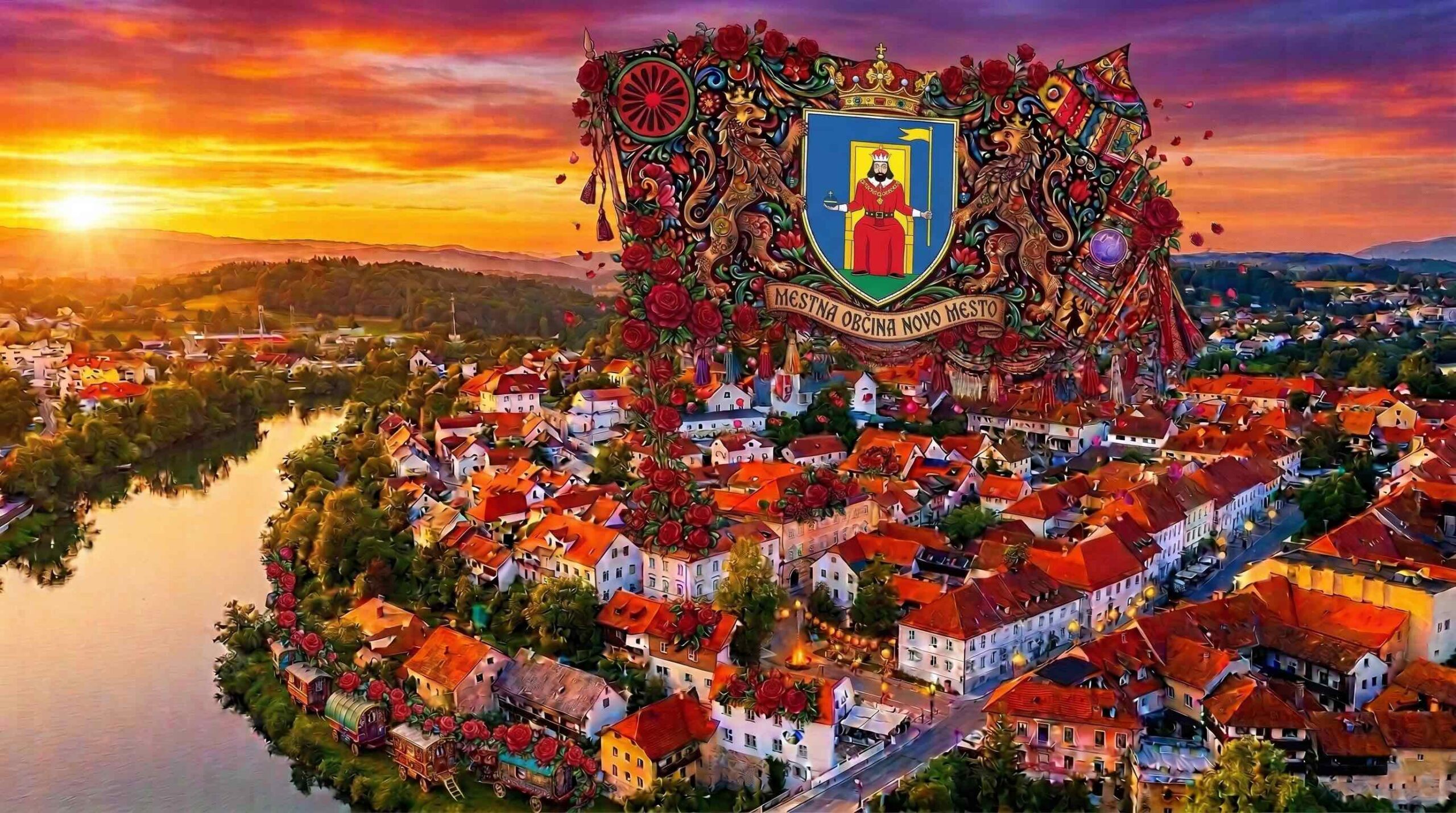
Until last October, Novo Mesto was mostly known for its scenic landscapes, medieval town squares and many bridges. And for being the hometown of U.S. First Lady Melania Trump.
Since then, it became the focal point of one of Slovenia’s dirtiest secrets – the (non)integration of its Roma minority. And the governments absolute inability to manage the intertwined problem of public safety and ethnic integration.
On October 25, 2025 a 48-year-old man died after he was attacked by a young Roma man, though original reports talked about a group attack and police still hasn’t ruled out the possibility of others being involved. The suspect has a history of criminal behaviour and was known to the police for earlier crimes.
The attack was just a last step in a series of violent events in the Lower Carniola region, all involving perpetrators belonging to the Roma minority. There were stabbings, stone-throwing at utility workers, shootings and arson. The mayor of the nearby town of Ribnica, Samo Pogorelc was also beaten by people belonging to the Roma minority.
Gregor Macedoni – mayor of Novo Mesto – said that the city has been raising the issue of poor social integration of the Roma for the last couple of years. Other cities from the region also joined Novo Mesto’s demands. To no avail.
PM Golob has initially condemned the attack, but then called for tolerance, patience and understanding. Two ministers from his cabinet, Justice Minister Andreja Katič and Interior Minister Boštjan Poklukar resigned following the tragedy. The prime minister justified the step with declaring ‘people have the right to safety and yesterday that right was not met’.
As tensions boiled, the government dispatched additional police units to the area, then adopted a series of haphazard legislative measures.
Dubbed as the Šutar Act (honoring the man killed in the attack, Aleš Šutar) – the bill enhances police authority and surveillance powers, granting the right to enter homes and search cars without warrants and to conduct raids on neighbourhoods suspected in engaging in criminality. It also includes several social welfare regulations, for example limiting social welfare payments or linking child benefits to school attendance.
Experts and social workers warned that the government is trying to ‘put out fires’ instead of addressing the core issue, with that risking a further rise in alienation and distrust.
Officially intended to ‘prevent’, the Šutar Act is feared to lead to ethnic profiling and discrimination. Further alienating an already segregated community that faces racialized poverty and racism, ‘exacerbated by patchy access to rights and political representation’.
Novo Mesto is no different: ‘poor housing, lack of access to quality education, and an address in a Roma settlement means no qualifications and little chance of employment’.
According to experts the same set of prejudices forms the very base of the bill.
Former Prime Minister Janez Janša also criticized the measures – on a different ground.
His government has previously proposed a set of legislative actions to address the issue, but those proposals were swiped off the table by the then-opposition leftist parties, including Golob’s own Freedom Movement.
Now, the supposedly leftist government adopted a series of strict measures that would make any conservative party blush. In Janša’s words, ‘had we [SDS] proposed this, we would have been called double fascists’.
The quick steps are meant to hide the consequences of years of government inaction in the face of a rise in violent incidents, as suddenly the measures and ‘amendments that were impossible to pass in the past will now likely become more socially and politically acceptable’.
The number of protests after the murder suggests that society has been way past deeming those measures ‘acceptable’ for quite a while.
It was only the government that failed to listen.


