
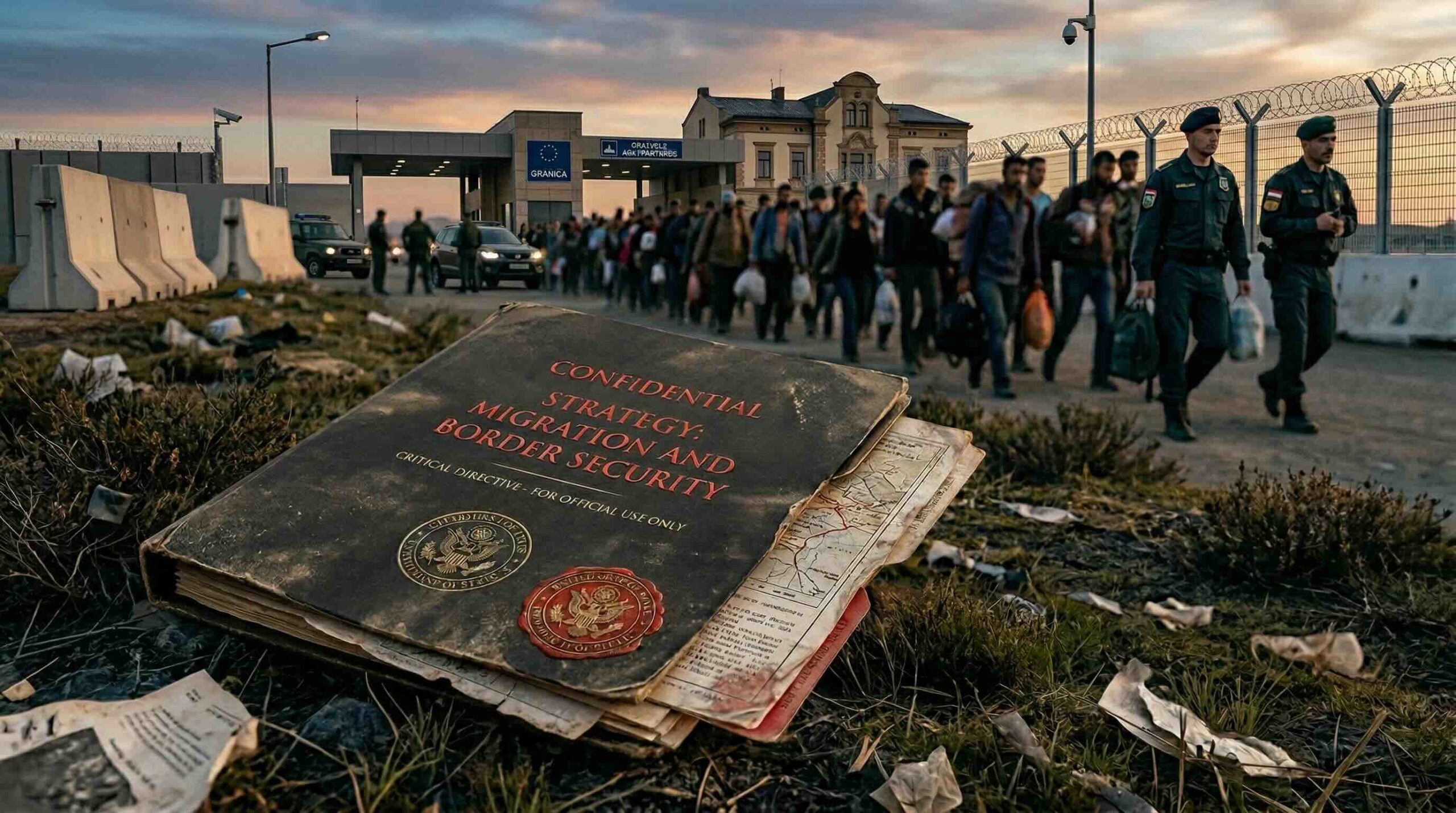
One month after the European Commission presented the first European Asylum And Migration Management Strategy, a crazy war broke out in the Middle East, and developments in the region not only cast doubt on whether the strategy’s objectives can ever be achieved in the new reality, but, there is a risk of a new mass migration crisis – even bigger than that in 2015 – hits Europe coming from the war-torn countries.
Anti-immigration rhetoric has surged throughout the EU after more than a million people, mainly from war-torn Syria, arrived a decade ago. That sentiment has resulted not only in the rise of far-right anti-immigration parties in countries like Germany, Austria and France, but it has also pushed governments to adopt tougher migration policies.
European leaders now fear the Iran war could set off another crisis, and they have taken tentative steps to prepare, according to The New York Times. The longer the war in Iran continues, the more European officials worry it will spur a new refugee crisis. That fear is driving anxious scenario-planning and back-channel diplomacy over how to prevent a fresh wave of migration from roiling Europe, the paper writes.
According to European lawmakers, the adoption of the European Asylum And Migration Management Strategy was intended to pave the way for fast-track asylum rejections given that under the new rules, EU countries may reject an asylum application if the person could have received protection in a country the bloc considers safe. In addition, the new rules move a step closer towards allowing EU countries to set up so-called return hubs outside the EU.
Undoubtably, all this is a good idea and the implementation of the new rules would be beneficial to the EU.
However, under the new circumstances, the newly adopted Strategy, which sets out the way forward to achieve three main objectives such as preventing illegal migration and breaking the business of criminal smuggling networks; protecting people fleeing war and persecution, while preventing abuse of the asylum system; and attracting talent to the EU to boost the competitiveness of the EU’s economy, sadly, never had a chance to succeed.
Given that the EU intended to achieve these objectives by managing migration together with partner countries, the Strategy’s basic idea has failed, thereby jeopardising the implementation of the EU Pact on Migration and Asylum (approved in 2023), which will enter into application on 12 June.
According to the Strategy, the EU should pursue migration deals with countries, including Tunisia, Egypt, Jordan and Lebanon – the latter country is currently affected by war, meanwhile both Jordan and Egypt play a key role in providing evacuation routes for those wishing to leave the war-torn region.
’We have a strong interest ourselves in avoiding new influxes of refugees from the region.’, German Chancellor Friedrich Merz said stressing that Europe does not want to see a scenario like Syria in 2015. (Former German Chancellor Angela Merkel’s statement in 2015 that Europe would be able to manage the influx of refugees – ’Wir schaffen das’ – is regularly brought up as evidence of Europe’s missteps, POLITICO points out.) Diplomatic talks between European and Turkish officials have already started to avoid a situation similar to the one a decade ago. During these consultations, all sides shared a wariness about a new migration wave. ’A new refugee crisis (…) is not an option for us,’ Sweden’s Migration Minister Johan Forssel said. The EU ’cannot overlook the possibility of a new refugee crisis,’ said Nicholas Ioannides, deputy migration minister of Cyprus, the EU country that is closest to the Middle East and, currently holds the rotating EU presidency.
With regard to Cyprus it should be noted that on 1 March, a drone incident took place at British military bases in the country, highlighting the potential threat to both the EU and UK assets in the Middle East from Iran and Lebanon.
The first European Asylum And Migration Management Strategy ’promotes a resilient and assertive European Union on the world stage and remains adaptable to the developments that take place in our continent and beyond. It serves as a compass for EU action, with clear objectives and priority of action, making strategic use of available resources and the operational support,’ the Strategy concludes.
In a report written before the war, the EU’s agency for asylum (EUAA) warned that, in Iran, a country of 90 million, ’even partial destabilization could generate refugee movements of an unprecedented magnitude.’
The European Union has had an entire decade to take action against migration, and just when it is finally about to take the necessary steps, the Middle East is once again in flames, derailing any existing strategies and plans.
Bad luck or, pure amateurism? Take your own pick.


