
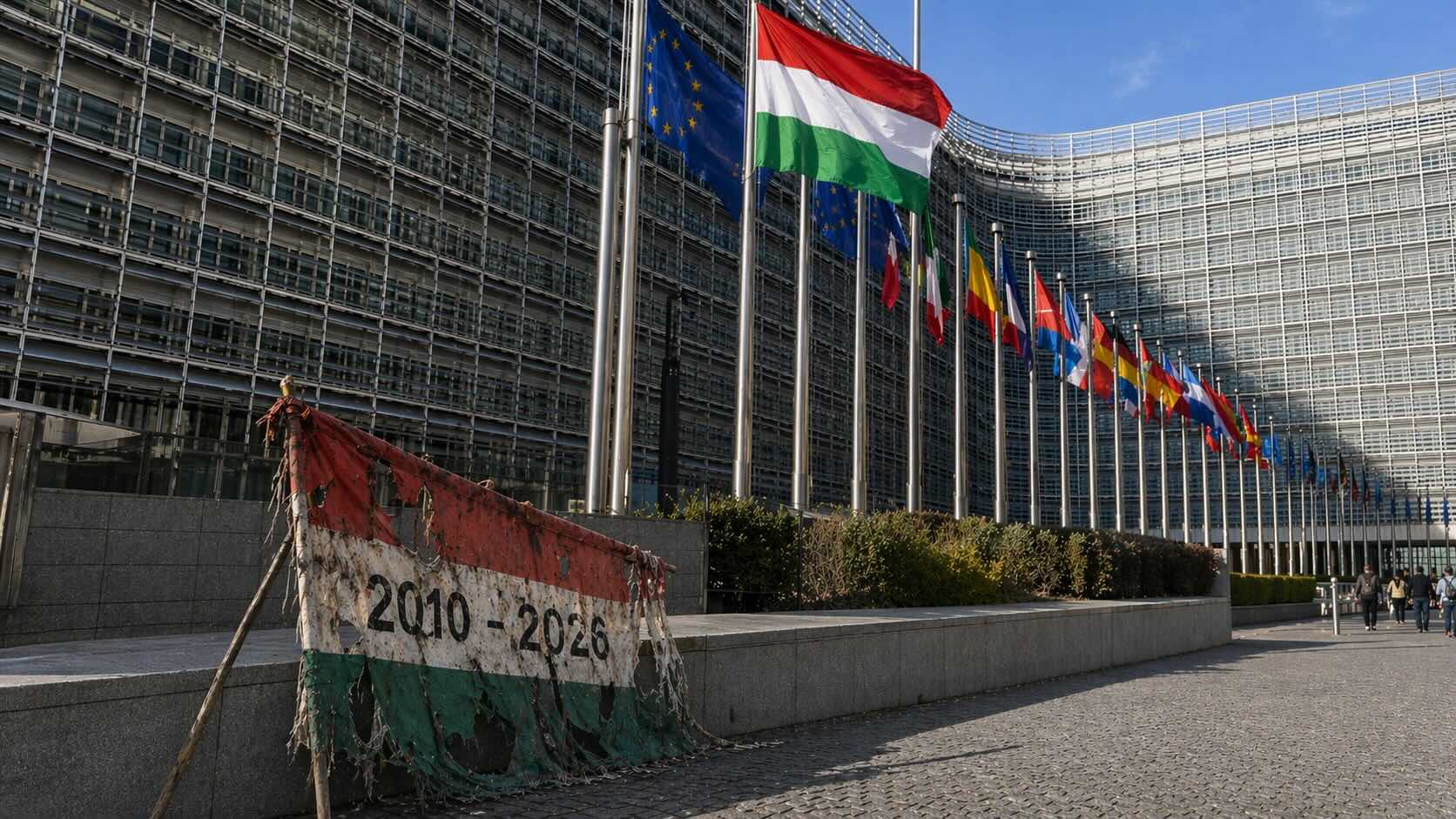
Rarely do Hungarian legislative elections draw the level of international attention they did in the run-up of the latest vote. Basically, the whole world was watching with their breaths held whether the EU’s longest-serving prime minister would be ousted and a new era would begin in the Central European country.
Now, that the dust finally settled after what some called a ‘structural event’ or a ‘monumental shift’ for the EU, experts await sweeping changes across a wide array of issues. Exactly as the prime minister-elect has promised.
Congratulatory remarks started to arrive after the first exit polls from across the continent – while left Washington ‘saddened’, albeit ready to collaborate with the new government.
EP President Roberta Metsola, for example, was among the firsts to congratulate to Magyar on the victory (both in English and Hungarian), declaring that Hungary’s place was at the heart of Europe. Among the early major figures to congratulate were the leaders of Poland, France and Germany.
The Commission also reacted with an unusual speed: European Commission President Ursula von der Leyen announced that ‘a country reclaims its European path’. Then she said they would being working with the new government ‘immediately’ to make progress that was ‘swift and overdue’.
The incoming government of Peter Magyar is expected to prioritize reforms and policy corrections – a renewed alignment with Europe. The changes to Hungary’s political system will likely include anti-corruption reforms, restoring judicial independence and reducing political control over the media. Other promised reforms concern the security apparatus, public healthcare, public procurement and the education system. The Commission hopes that the battles over rule of law issues are finally over.
Hopes are flying high in Brussels for a much smoother cooperation on foreign policy issues as well, for example when it comes to granting a EUR 90 billion loan to Ukraine, repeatedly blocked by the Orban-government – in exchange for the release of EUR 35 billion in frozen EU funds. In fact, EU officials have confirmed that preparations are already underway to move on disbursement the moment the new government takes place.
After all, the Tisza Party’s manifesto outlines a broadly pro-European trajectory, having pledged to rebuild trust with EU and NATO allies and to ‘choose Europe’. In another interview with AP, Peter Magyar told that he’d pursue a ‘constructive but critical relationship’ with the EU.
During the campaign, Peter Magyar distanced himself from the Orban-government’s approach to European affairs, even if he doesn’t seem to agree with every policy initiative of the Commission.
Most experts count on a diminished Kremlin influence with President Putin’s main ally out. Now, also the Commission hopes that it might get easier to adopt new sanction packages against Russia.
Yet, in a realistic understanding of Hungary’s dire dependency on Russian fossils, Magyar has emphasized the need to keep Russian imports in the country’s energy mix. Neither can Hungary completely replace Russian financing for its PAKS-II nuclear power plant. As Magyar has already made it clear, Hungary would not be able to end its reliance on Russian energy before 2035.
This far, Moscow gave only a restrained reaction to Orban’s defeat. Kremlin spokesman Dmitry Peskov said that Russia respects the choice of Hungarian voters and expects ‘to continue our very pragmatic contacts with the new Hungarian leadership’. He expressed his view that the vote didn’t have anything to do with the future of the Russian-Ukrainian conflict.
And again, Peter Magyar has drawn a few more red lines before on the issue of Ukraine, as well: his Tisza Party voted against arms deliveries to Ukraine in the European Parliament. Then, the Tisza Party sided with Orban’s FIDESZ in demanding that European aid to Ukraine be conditional on the functioning of the Druzhba pipeline, the same way as it opposes Kyiv’s accelerated accession.
Thus, President Zelensky might have expressed his readiness for meetings and joint constructive work, Magyar’s victory will likely not lead to complete reversal on Hungary’s stance on Ukraine.
Other issues on which Magyar seems to be close(r) to Orban’s opinion are migration and agriculture – both occupying high positions on voter’s priorities. The Tisza Party has this far rejected the migration and asylum pact because of the high levels of voter dissatisfaction with how the EU handles immigration.
The path Hungary chooses will get clearer in the coming weeks as Peter Magyar and his Tisza Party take office. The depth of the change will be determined more by geopolitical and electoral realities than ideologies, though.


