
Politicians love those moments.
Declarations, summit photographs, carefully choreographed handshakes and speeches announcing that history has just changed direction.
Every opportunity is taken – so was the latest “grand turn” in European politics.
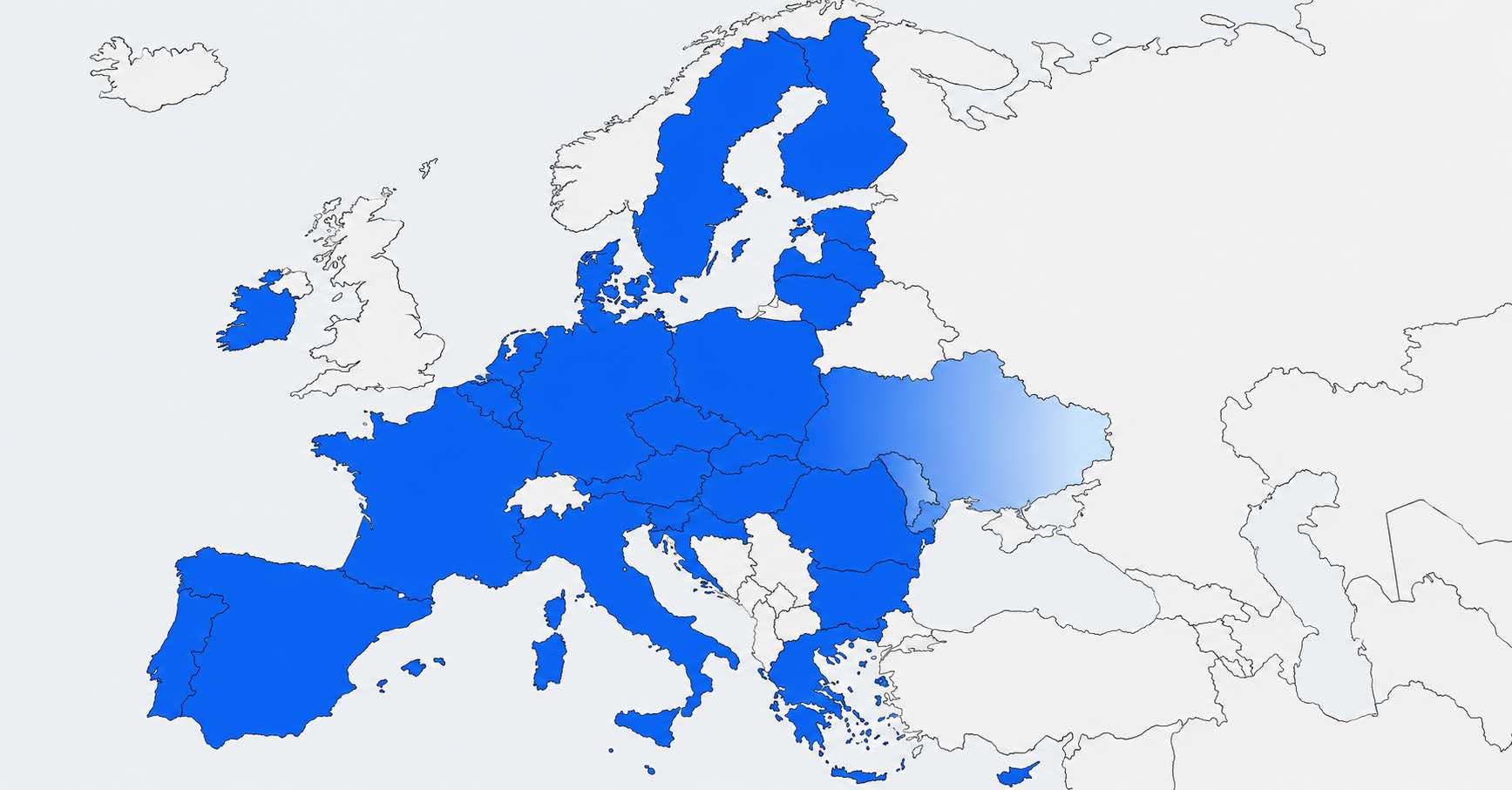
After years of political disputes, diplomatic bargaining and Hungarian objections, the European Union finally opened the first negotiating cluster in the accession talks with Ukraine and Moldova.
The celebratory remarks – a breakthrough, a milestone, a historic step toward Europe – were all boringly predictable.
They weren’t completely untrue – yet, show only one side of the coin.
Ukraine and Moldova did not enter the European Union.
They have barely entered the waiting room.
This distinction cannot be emphasized enough. Because expectations, particularly in Ukraine, have begun to drift far ahead of political reality.
For Kyiv, the opening of negotiations is understandably emotional – amidst its ongoing war and efforts to defend its sovereignty. A terrible price for its European choice.
Thus the symbolism of moving closer to the EU matters enormously.
But symbolism is the easy part, and what begins now is much more difficult.
The first cluster of negotiations, known as “Fundamentals,” deals with exactly those issues that have delayed accession processes across Europe for decades.
Judicial independence. Anti-corruption measures. Democratic institutions and public administration. Rule of law.
The exact same areas where it is easy to announce reforms – but then it takes years of wrangling and fact checking to prove those reforms actually happened.
The European Commission’s current favorite phrase for this process: merit-based enlargement, that roughly translates into, “show us the results first.”
This is where a common misunderstanding appears.
Ukraine and Moldova probably started this stage together – and they have often been presented as s pair. They symbolize Europe’s renewed interest in enlargement. There’s an almost romantic vision of both countries marching hand in hand towards the big European brotherhood of countries.
But that does not mean they are tied together, as different European institutions have repeatedly stressed. Every candidate country advances according to its own progress.
Because reality is far less romantic and accession is not a three-legged race.
If Moldova reforms faster, it can move ahead. If Ukraine performs better in certain areas, it can move ahead instead.
If one thrives on analogies, enlargement more likely resembles two students entering the same examination hall. They receive the same instructions, face the same examiner and start at the same time. Nobody guarantees they will finish together.
This reality may become uncomfortable for the political leadership in Kyiv.
Ukraine’s geopolitical importance is undeniable. It is larger, richer in resources, strategically crucial and central to Europe’s security calculations.
If enlargement were a competition in geopolitical importance, Ukraine would win because Moldova cannot compete on those terms.
But it is a competition in meeting criteria.
In come the “traditional” anti-enlargement buddies, who’ll shape the next phase of the process more than many Ukrainians realize. The Netherlands, Denmark and Sweden.
None of these countries can reasonably be described as anti-Ukrainian. Quite the opposite. All three have strongly supported Ukraine’s struggle against Russian aggression.
Yet support for Ukraine and support for rapid EU enlargement are not identical positions.
The Netherlands has traditionally been among the most demanding voices whenever enlargement is discussed. Dutch governments tend to view membership less as a geopolitical reward and more as a legal and institutional achievement. Audits first, photo sessions later.
Denmark usually approaches enlargement in a similar spirit. Copenhagen rarely rejects enlargement outright, but it has little enthusiasm for shortcuts. Danish governments generally ask a simple question: have the criteria been fulfilled, yes or no?
Sweden may appear more enthusiastic about Eastern enlargement, and historically it has been. Yet Stockholm has also become increasingly supportive of a strict conditionality approach. Friends can be supportive and demanding at the same time.
If this sounds familiar, the history of Romania’s Schengen accession offers a useful lesson.
For years, Romanian leaders argued that their country had met the technical requirements for joining Schengen. Many experts agreed. Yet political concerns inside certain member states repeatedly delayed the process.
Romania eventually succeeded, but only after discovering a fundamental truth about the European Union.
Technical compliance does not automatically equal political consensus.
Ukraine may face the same reality.
Especially if economic difficulties somewhere else in Europe suddenly make enlargement less attractive.
Other capitals might discover concerns of their own, different from the views of the Dutch, Danish and Swedish.
None of this should not be interpreted as hostility toward Ukraine or Moldova.
Because, it is simply the nature of things in an organization where every member state has a voice (that sometimes translates into an effective veto).
For that reason, a moment of caution would be wise, especially in Kyiv. This breakthrough is not the evidence that membership is now inevitable.
Nothing in EU enlargement is inevitable.
Kyiv actually needs to deliver the promised reforms. Not in declarations of solidarity but in court decisions, anti-corruption prosecutions, administrative capacity and institutional credibility.
At least, accession is no longer a theoretical possibility. The process has become real. This also means, that the real work has just began. The first chapter is written, the rest is in progress. We’ll see in a couple of years whether it will share the fate of A Song of Ice and Fire.


