
Russia’s latest elections should have calmed the nerves – even if they were more predictable than rain in October. Though polls show growing dissent with the “special military operation” against Ukraine – and for the first time in years, President Putin’s approval ratings have declined, as well.
The result of the election confirmed that the Kremlin still controls the country, at least on paper. The ruling party got supermajority, President Putin can sit back and relax. Only, he can’t.
Inflation is soaring, fuel prices have skyrocketed, ordinary Russian citizens are struggling to meet ends, yet military expenditures are going up. As Ukrainian drone attacks against Russian targets are becoming more and more successful, morale has been shrinking at home. And the percentage of those considering the war futile has been steadily rising (but is still a silent minority).
For a Western political leader, this would probably signal the need for ending the conflict, but not in Russia.
All through the campaign, President Putin actively pushed for a narrative portraying Russia as the ‘victim’ of malicious Western attacks, strengthening the belligerent mood and emphasizing that the success of the ‘special military operation’ was, in fact, an existential question. The collapse of the peace talks, the ‘incidental’ extension of NATO (Finland and Sweden joining the organization was probably not something the Kremlin thought would happen) all lead towards one outcome.
For the last few weeks, attacks against Ukrainian targets have been intensifying, both in their pace, methods and choice of targets.
If anything, the elections seem to have convinced the Kremlin (and/or Putin) that the war can and shall go on, because it helps to solidify power at home.
Or can be expanded, even though even one country with a medium sized army proved a bite too big to swallow.
Yet, the last few weeks so a different sort of intensification, as well. Targets moved beyond Ukraine. Up until now, EU members – Germany, Poland, Italy Baltic states – were only victims of different sorts of sabotage actions (and Japan was only provoked by President Putin’s visit to disputed island territories), but experts fear it’s only the matter of time before things spiral out of hand.
At first, drones entering NATO airspace were claimed to be ‘lost’ or ‘misdirected’. By now, Moscow doesn’t even deny it. Especially not when the victims are the countries who supply and support Ukraine’s war efforts.
Cyber-attacks against critical infrastructure have been the preferred method of Russian intelligence for decades – and they’ve been happening with increased frequency lately. Some reports point at a fourfold increase in sabotage actions since 2024.
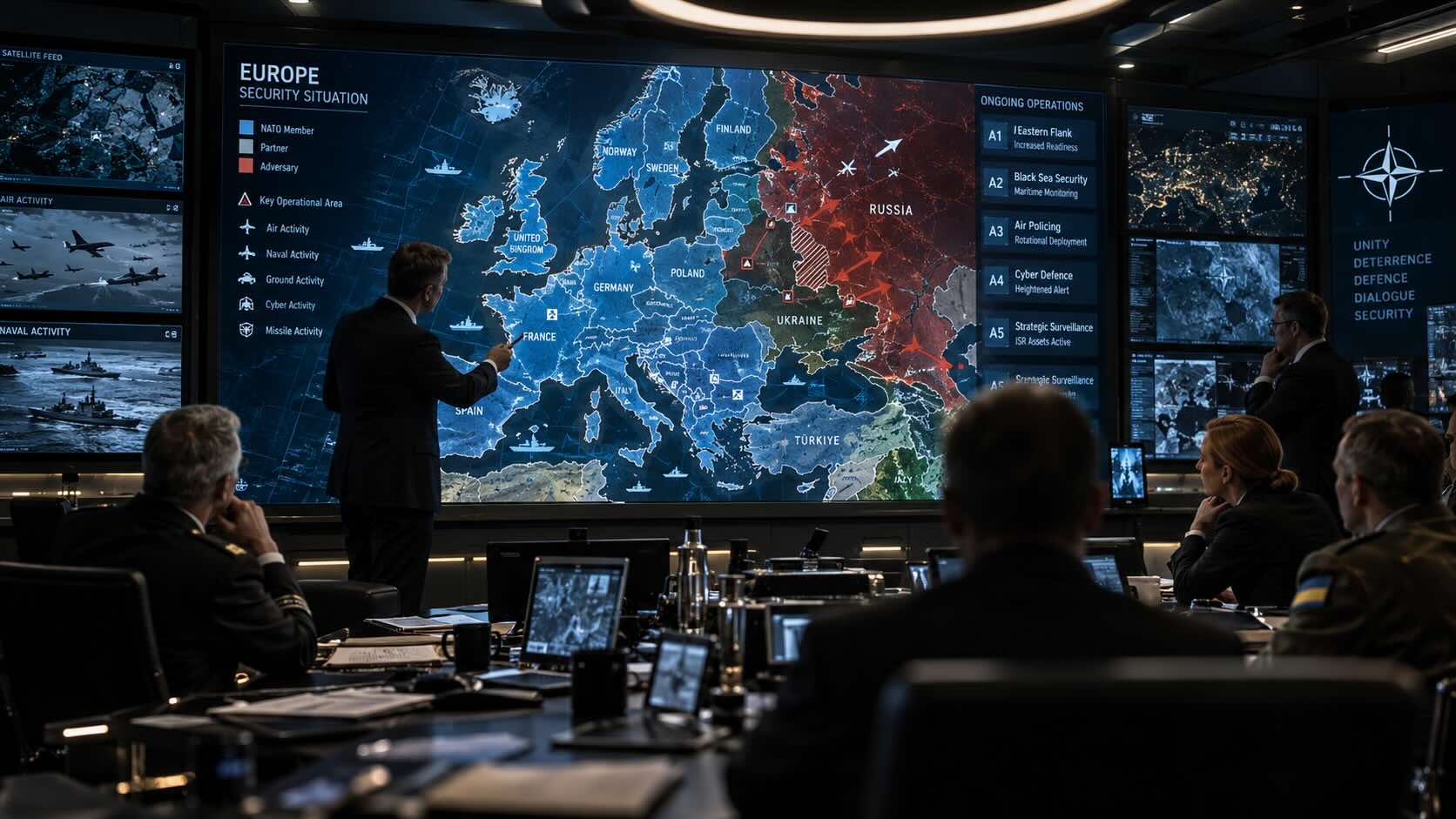
The Kremlin probably (hopefully) wants to avoid a conventional war with NATO or any of its member states. But it doesn’t mean that it won’t go against them in unconventional ways. More likely than not, the NATO (and by extension, the EU) must prepare for ongoing airspace violations, sabotage actions and cyber-attacks, meddling in elections and all sorts of covert intelligence operations – all with the aim of testing NATO’s response and reactions.
Countering such attacks is not easy and will test the principle of deterrence.
Every moment of hesitation will fuel the Kremlin’s hopes that NATO can be divided, yet every moment of decisive action can be portrayed as an ‘act of Western aggression’ against Russia.
Like balancing on a rope above a canyon. To be able to do so, the NATO will need to define its red lines and will need to enforce them.


