
Europe’s scorching summer and dry riverbeds are one side of the coin.
Farther north, a cargo ship is using water that, not long ago, was a wall of ice.
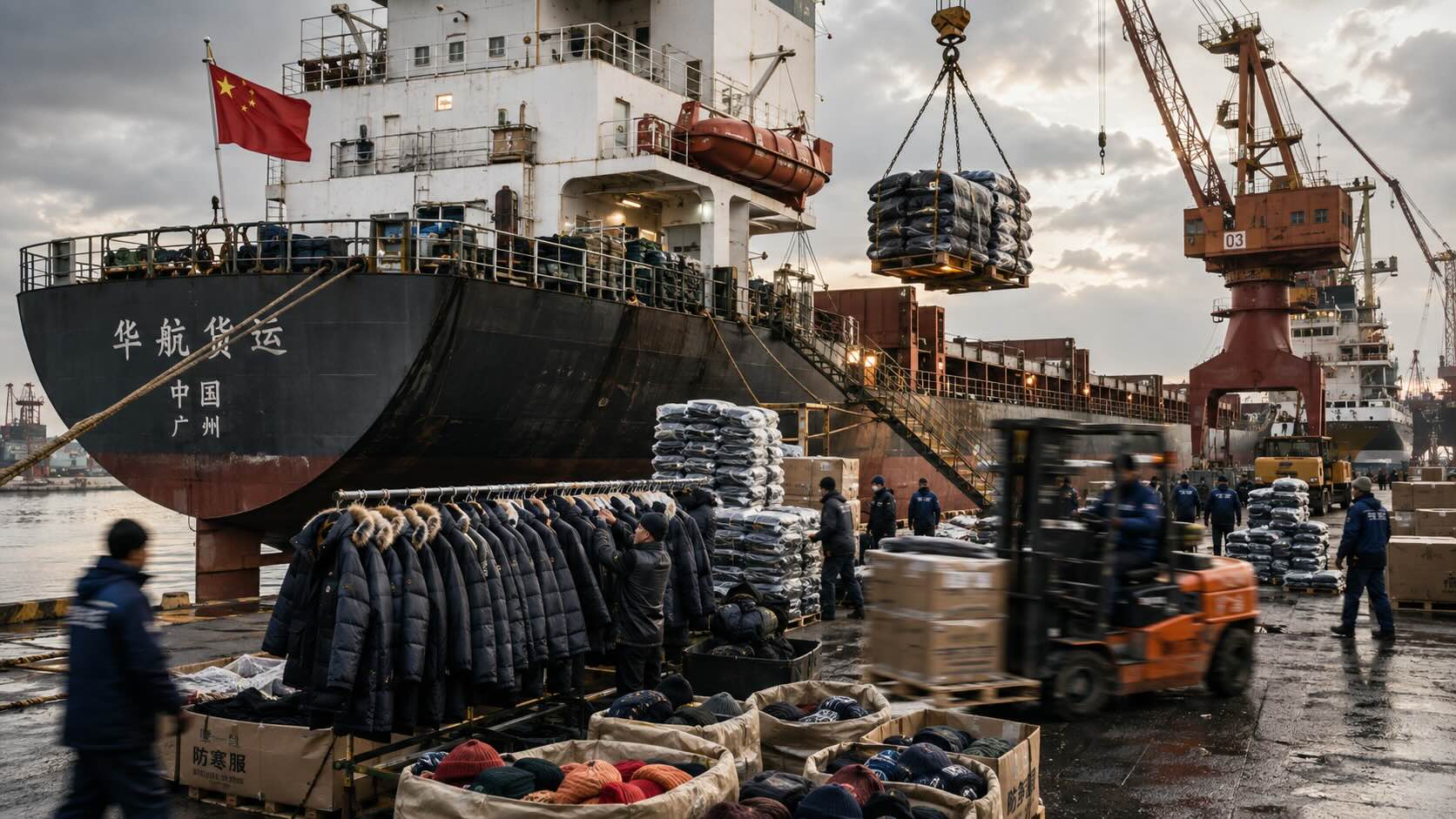
Chinese-controlled Sea Legend Shipping began the first scheduled weekly container service in August. The ships travel between China and northern Europe through Russia’s Northern Sea Route.
Dubbed the “China-Europe Arctic Express”, Beijing is planning to send eight shipments from Ningbo-Zhoushan to Felixstowe between mid-August and early October, with transit times of roughly 20–21 days. (Just in comparison, the Suez-route generally takes around 40 days.)
There’s no plan for the Arctic route to replace Suez permanently. Right now, it is just a limited time possibility, but shows the direction.
The more so as the launch comes as the global shipping system is being reminded how vulnerable it is to geopolitical shocks. The Strait of Hormuz — through which a fifth of global oil and LNG shipments normally pass — has seen maritime traffic collapse amid the war and attacks on tankers.
The change was enabled not by better design or stronger ice breakers, but weather.
WMO’s latest report shows the Arctic is warming roughly three to four times faster than the global average. In June 2026, Arctic sea-ice extent was the sixth-lowest for that month, while Western Europe recorded its warmest June on record.
Of course, the interplay of factors is complex, each amplifying the other and the process cannot be simplified into “it’s all caused by El Niño”.
The Arctic Express is just an example of how global warming creates an extra economic paradox. While some supply chains are disrupted by climate change, new ones are opening in other places.
For China, the attraction is straightforward.
A voyage of about three weeks means less fuel, less capital tied up in inventory and faster access to European consumers. Sea Legend has targeted high-value and time-sensitive cargo, including lithium batteries and photovoltaic equipment. A shorter supply chain can cut working capital and speed response to demand.
Not to mention the other benefits: the Arctic offers a corridor avoiding the two biggest chokepoints threatening China-Europe trade: the Suez and the Malacca Straits. Cooperation with Russia is also running much smoother than with the rest of the world.
Naturally, the Arctic is not a free highway.
Sea ice remains unpredictable; weather is severe; search-and-rescue infrastructure is thin; insurance and polar operating costs are higher. Ships need suitable ice-breaking capability, while Russian authorities control access to the Northern Sea Route. Russia’s icebreaker fleet and Arctic infrastructure are therefore part of the logistics equation.
China is not simply discovering a route; it is entering a Russian-controlled maritime system.
There are severe limits on how far this adventure can go.
While it means that the operators of Suez Chanel don’t need to turn off the lights just yet, it would be folly to simply dismiss the Arctic service as a mere curiosity.
For now, the biggest effect seems to be indirect.
More Arctic capacity can pressure existing carriers on price and schedules. It can change which European ports matter as Baltic hubs could gain value as Arctic gateways, while rail and warehouse networks feeding northern ports can become more important.
The geopolitical implications can be even sharper.
Russia has the geography and infrastructure to manage the Northern Sea Route; China has the cargo volumes and shipping capacity that can make it commercially relevant. Moscow gains transit revenues and a strategic rationale for its Arctic presence. Beijing gains a shorter route and another way to reduce exposure to maritime chokepoints.
The relationship is useful precisely because neither side fully controls the other’s assets. But for Europe – it means new routes, diversification while also dependence on Russia.
All in all, the new route is neither green logistics, nor a stunt.
A forest burns in Spain; rivers run low in Germany; a container ship crosses waters once closed by ice. These are not separate stories.
They are different economic manifestations of the same structural change.
The early signs that climate change is beginning to redraw the economic map — creating new corridors, new dependencies and new bargaining power in places where trade planners once saw only ice.


