
EU Energy Commissioner Dan Jørgensen made a discovery that looks nothing short of a heavenly revelation.
On January 28 he said that fears were growing that Europe was becoming too dependent on the United States for liquefied natural gas (LNG). The ‘turbulent times’ of today were made ‘more serious and complex’ due to ‘the strained relationship to the U.S. and the fact that we have an American president that does not exclude using force against Greenland’.
Jørgensen told to journalists that ‘geopolitical turmoil in the wake of the crisis in Greenland has been a wake-up call’.
A groundbreaking discovery, beyond any doubt, especially as it comes from the very top of the same EU that has just decided to end Russian gas imports by the end of 2027, and works towards a full phase-out of Russian oil, as well.
As a quick and easy pivot, the EU first focused on securing as much American LNG as possible to replace Russian deliveries.
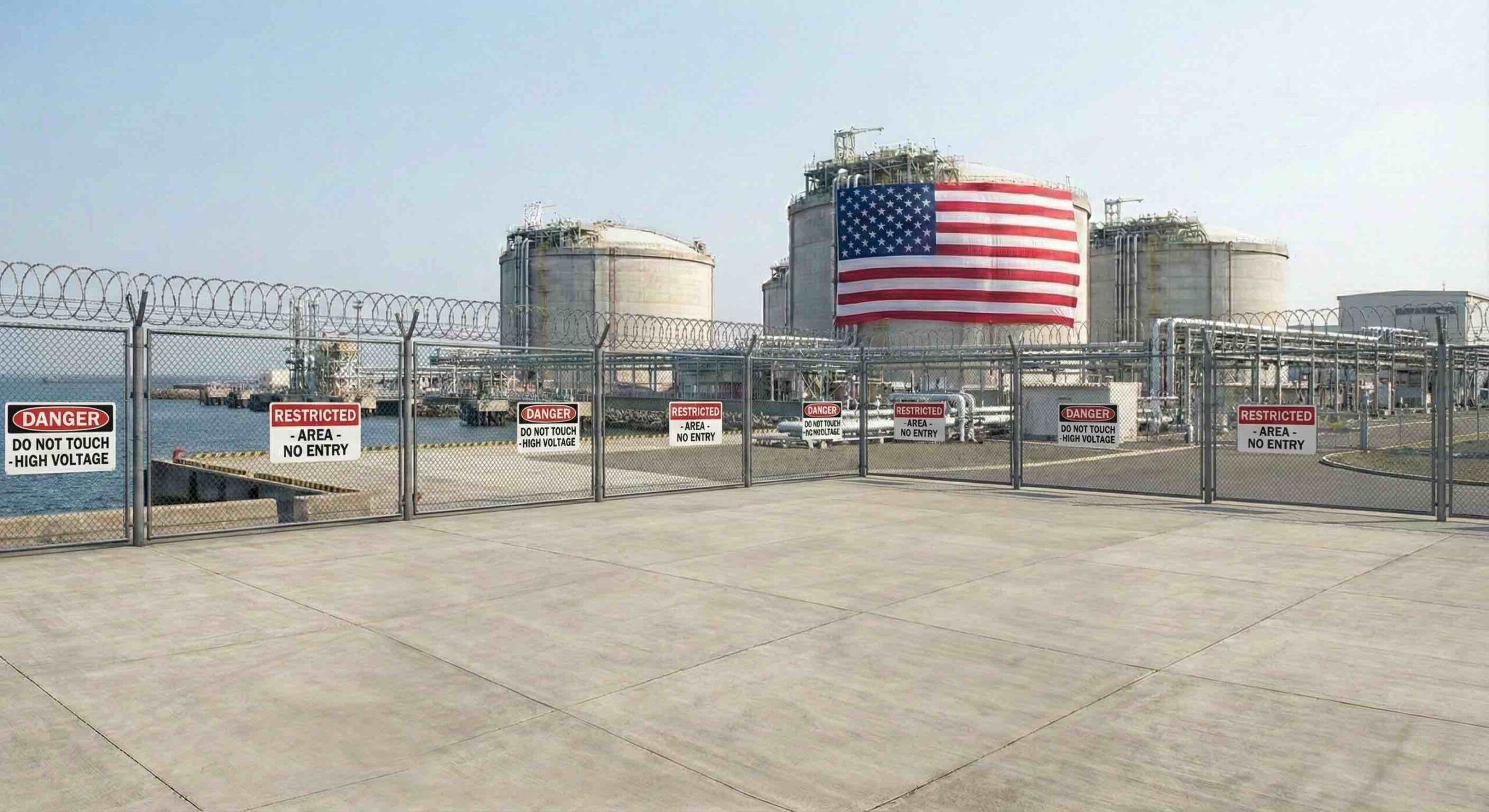
Thus, Europe has rapidly increased imports of LNG from the U.S. – in 2025, 57 percent of the EU’s LNG came from over the Pond (that is 27 percent of total gas volume). In 2025, the EU committed to an energy trade deal with the Trump administration and pledged to buy 750 billion dollars worth of U.S. oil, gas and nuclear technologies through 2028.
It planned to use the American resources to maintain supply reliability during and after transitioning to alternative supplies. A transition process, that in itself has exposed the structural vulnerabilities of the continent’s energy strategy.
The turmoil around Greenland came also an eye-opener in the energy sector: trading Russian gas to American LNG is not energy independence, but simply dependence on a different supplier.
Jørgensen also admitted this when he said, ‘I definitely hear this when speaking to energy ministers and heads of state all over Europe, that there is a growing concern, which I share, that we risk replacing one dependency with another.’
As a remarkably original suggestion, Jørgensen suggested that ‘we need to diversify as much as possible’.
Locally produces renewables are also promoted, along with non-Russian nuclear fuel resources for countries still dependent on Moscow, but Jørgensen has Canada, Qatar and North African countries on his target list for LNG suppliers. He plans to travel to these countries in the coming months to secure more diverse supply chains and ‘reduce the influence of any single providers’.
Each has its pros and cons, but one thing is common: none can compete with the cheap price of Russian gas. In addition to this, the EU’s ambitions of green transition and zero-carb emissions, along with policies like the Corporate Sustainability Due Diligence Directive, are at odds with Qatari production – and penalties for violation might prompt Qatar to halt LNG shipments.
The failure to secure alternative resources will further increase the dependence on American LNG, especially if a total ban on Russian gas would take effect.
That is, if potential buyers are not scared off by U.S.-EU tension, as Greece’s energy minister alleges following the failure to auction off delivery capacities on the ‘Vertical Corridor’ network, an initiative pushed by the U.S.
The auction meant to sell 72 gigawatt-hours of pipeline capacity – but ended up at a meagre 48 megawatt-hours, as gas traders are not confident that the U.S. would reliably deliver the LNG.
The other part of the blame falls on the EU, though. In the rush to pivot away from Russia, the EU didn’t fix regulatory issues to open new supply routes.


