
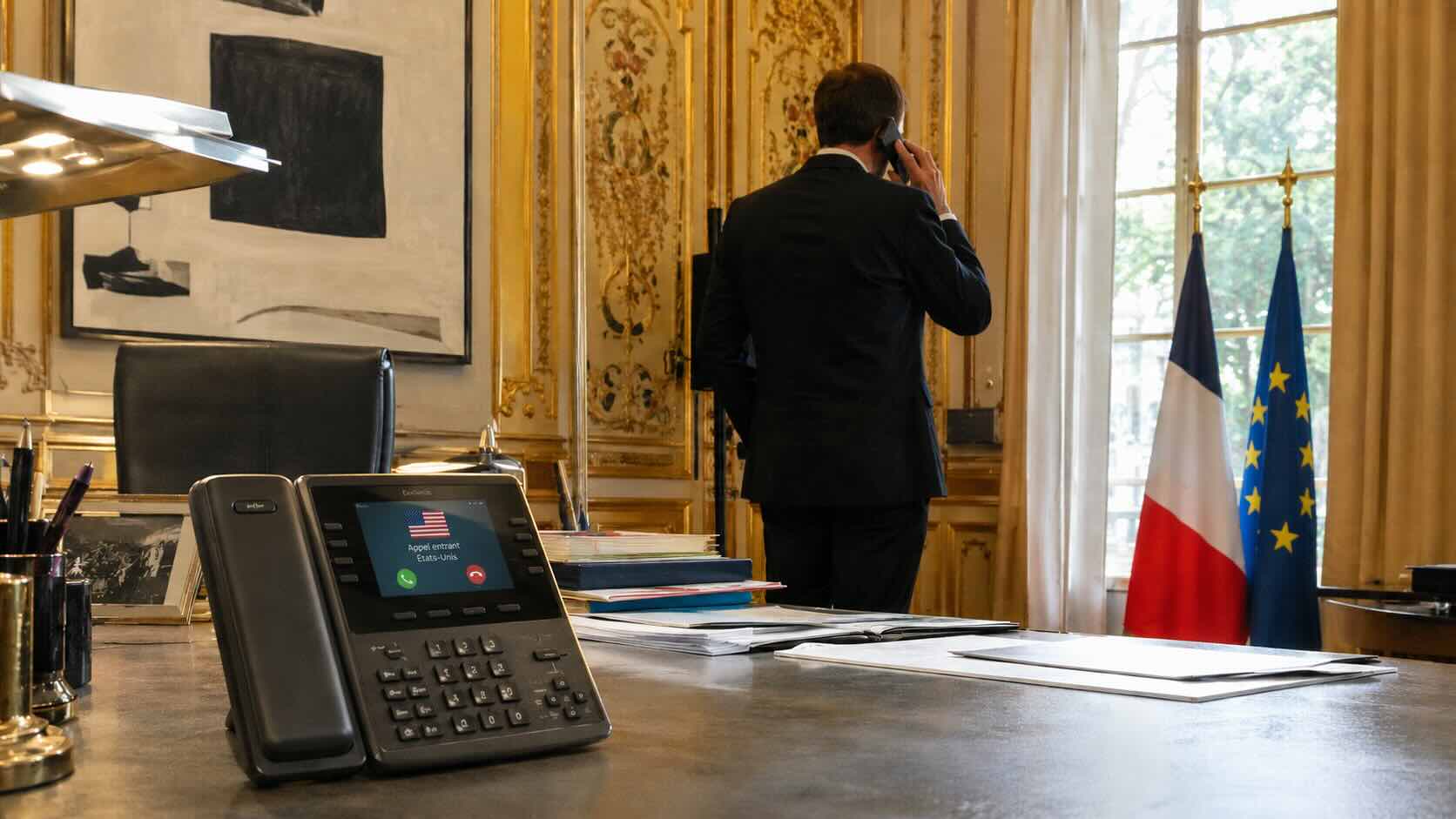
In recent remarks delivered in Cyprus, Emmanuel Macron returned to a theme he has been developing—even if often controversially—for years: Europe is entering a new strategic era, one in which its traditional assumptions about allies, adversaries and dependencies no longer hold.
To summarize the French president, the geopolitical landscape has shifted not temporarily but structurally. The United States is recalibrating its global priorities, Russia has entrenched itself as a long-term antagonist, and China is both partner and systemic rival. For Europe, this means one thing: adaptation is no longer optional.
Macron’s speech underscored a stark message.
The transatlantic relationship, long considered the bedrock of European security, cannot simply revert to its pre-Trump form. Even if political leadership in Washington changes, the underlying strategic direction—greater focus on Asia, reduced appetite for underwriting European security, and a more transactional approach to alliances—will persist.
In this framing, Europe must prepare for a world in which American guarantees are conditional, delayed, or absent.
This is, of course, not new rhetoric from Macron.
Over the past two years (or more), he has repeatedly argued for “strategic autonomy”—a term that has triggered both support and suspicion across European capitals. From speeches at the Sorbonne to remarks at EU summits, Macron has consistently warned that Europe risks becoming a “vassal” if it fails to assert its own geopolitical agency.
Amidst the recurring elements were defense integration, industrial policy, energy independence, and technological sovereignty.
What distinguishes Macron’s latest intervention is its bluntness.
Usually, he sounds his arguments in aspirational language about European potential.
Now, instead, he spoke in terms of necessity and urgency.
The European Union, he says, is effectively in strategic competition not only with Russia and China but increasingly with the United States on economic and technological fronts. Trade disputes, industrial subsidies, and diverging regulatory philosophies are not anomalies—they are symptoms of a deeper divergence.
Why, then, does Macron appear so isolated in articulating this vision?
Part of the answer lies in political culture. France has a long tradition of strategic thinking rooted in sovereignty and independence. From Charles de Gaulle onward, French leaders have been comfortable questioning Atlantic orthodoxy (that also included withdrawing from NATO’s integrated military command in 1966).
Macron’s worldview is, in many ways, a modern extension of this tradition—adapted to globalization but anchored in the same instinct for autonomy.
By contrast, many European leaders remain shaped by a post-Cold War mindset in which the United States is not just an ally but the ultimate security guarantor.
For countries in Central and Eastern Europe, this reliance is not theoretical; it is existential. The Russian threat is immediate and tangible, making any suggestion of distancing from Washington appear risky, if not reckless.
In this context, Macron’s rhetoric can seem detached from frontline realities.
There is also a question of political incentives. Acknowledging a structural shift in EU–US relations requires difficult policy choices: increased defense spending, deeper integration, potential trade-offs with national sovereignty, and a willingness to confront both allies and adversaries.
These are not easy messages to sell domestically, particularly in a political climate already strained by economic pressures and social divisions.
Moreover, ambiguity can be politically useful. By avoiding a clear stance on the future of transatlantic relations, some leaders preserve flexibility and minimize controversy. (Probably also cradling a small hope that things, in the end, might still return to the old “normal”.)
Macron, by contrast, has chosen clarity over comfort—staking out a position that is intellectually coherent but politically divisive.
Yet the cost of this hesitation may be growing.
Events of recent years—from shifting US foreign policy priorities to economic tensions and supply chain disruptions—have lent credibility to Macron’s warnings. The question is no longer whether the global order is changing, but how quickly Europe is willing to adapt.
Macron’s critics often argue that his vision overstates the extent of transatlantic divergence and risks undermining unity at a critical moment. There is some truth to this concern. The United States remains Europe’s most important ally, particularly in security terms. But acknowledging this reality does not negate the need for greater European capacity and independence. In fact, the two objectives may be complementary rather than contradictory.
The deeper issue is not whether Macron is entirely right, but whether Europe can afford to ignore the questions he is raising. Strategic clarity is rarely comfortable, and it often arrives before consensus. Macron’s speeches, including his latest in Cyprus, force a debate that many would prefer to postpone.
In the end, the perception that Macron stands alone may be less a reflection of his uniqueness than of Europe’s reluctance to confront an inconvenient truth. The strategic shift he describes is already underway. The real question is how long it will take for the rest of Europe to speak about it with the same candor—and to act accordingly.


