
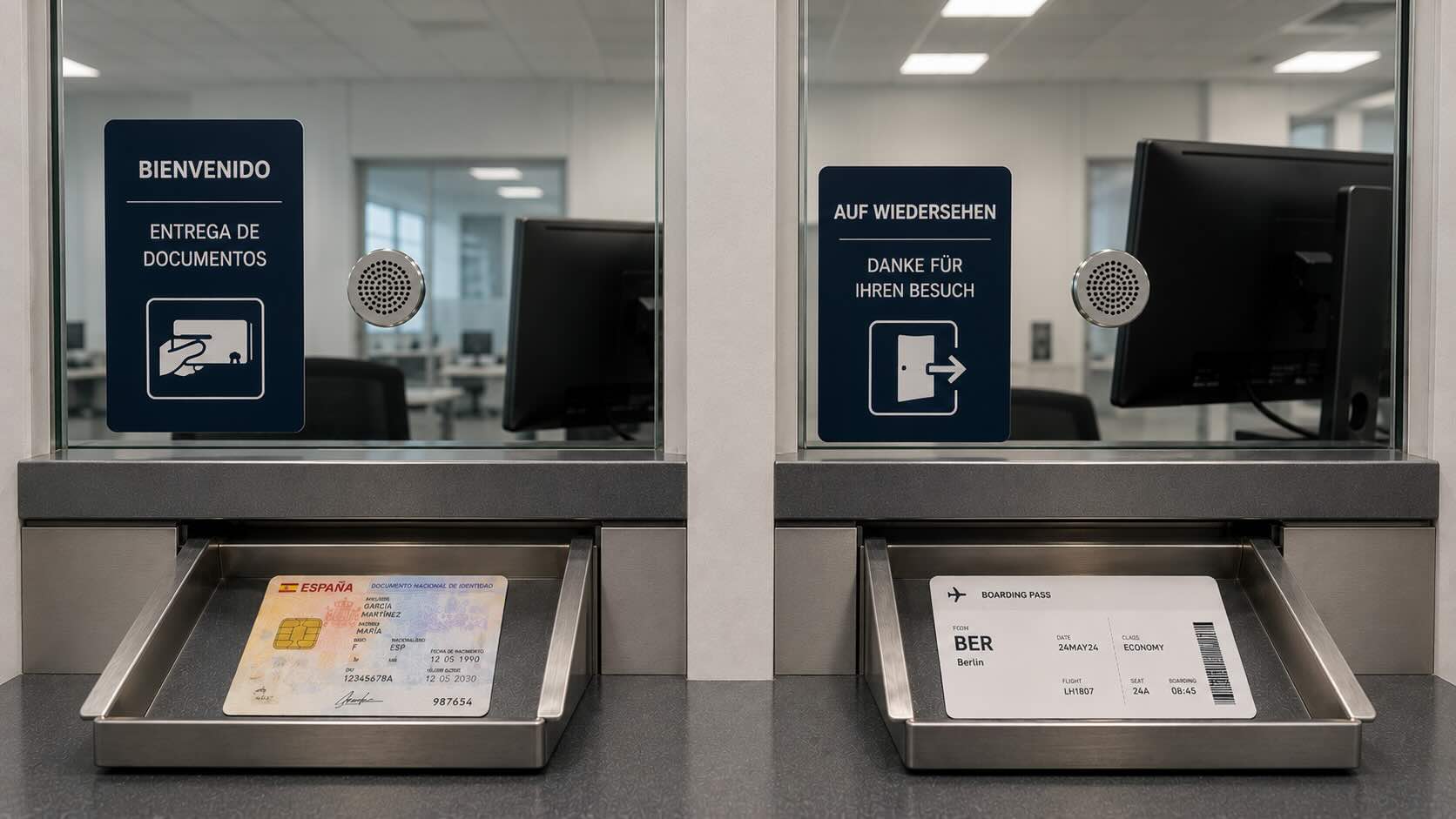
While Madrid approved new legislation in April that will give legal status to more than 500,000 unauthorized immigrants who currently reside in the country, Berlin held talks with the Syrian leader Ahmed al-Sharaa about returning almost a million Syrians who sought refuge in Germany during the civil war in Syria. In the latter case, the priority would be returning those who no longer have a valid residence rights, especially criminal offenders.
Both approaches are triggered by internal political developments. Spanish PM Pedro Sánchez defended his left-wing coalition government’s decision against the center-right People’s Party (PP) and the far-right Vox which wants the country’s irregular immigrants deported, in light of Spain’s aging population. Sánchez said that as immigrants from Spain had historically flowed to other nations, the country had a moral obligation to welcome newcomers just as its own people had been embraced elsewhere. German Chancellor Friedrich Merz’s government has taken a tougher line on migration as anti-immigration AfD party has gained significant public support across Germany. Many of the Syrians came to Germany during the refugee crisis of 2015, following the iconic words of former Chancellor Angela Merkel – ’Wir schaffen das’, meaning ’We will manage this’.
You will find some concrete examples below how the EU, in particular Germany and Spain succeeded in managing migration.
Key takeaways from current migration trends with a focus on Germany and Spain
As 12 June – the date of the EU Pact on Migration and Asylum coming into force – comes closer, it is recommended to read between the lines of a report recently published by the Centre for Research and Analysis on Migration at RFBerlin.
Immigration in the EU has reached historically high levels. The number of immigrants in the bloc has climbed to a record high of 64.2 million in 2025, the study shows.
The report provides a shocking data: while the EU’s foreign-born population was around 40 million in 2010, the same number has been roughly 64 million in 2025.
Migration inflows into the EU are highly concentrated in a small number of destination countries. Spain and Germany alone absorbed nearly half of all arrivals, with inflows of around 1.22 million and 1.03 million migrants, respectively.
As for the the share of foreign-born individuals in the total population across EU Member States in 2025, the EU average stands at approximately 14%, according to the study. Due to the fact that Germany remains the main destination country, its foreign-born population has increased from around 10 million in 2010 to nearly 18 million in 2025 (approximately +70%).
France and Spain also experienced sustained growth, reaching approximately 9.6 million and 9.5 million foreign-born residents, respectively, in 2025.
Asylum applications and refugees
Asylum applications in the EU are highly concentrated in a small number of countries. In 2025, the total number of asylum applications in the EU amounted to 669,365. Spain is by far the largest recipient, with around 141,000 applications, followed by Italy (127,000), France (116,000), and Germany (113,000). Together, these four countries account for roughly 74% of all asylum applications in the EU.
While the 2015 refugee crisis marked a sharp increase in arrivals, with more than 1.25 million first-time asylum-seekers in the EU, Russia’s war in Ukraine resulted in around 4.35 million fleeing Ukraine and being under temporary protection in the EU by December 2025.
Germany hosts by far the largest refugee population, with approximately 2.7 million refugees, more than double that of Poland, the second-ranked country (around 1 million). France follows with around 751,000 refugees, while Spain and Czechia host 471,000 and 381,000, respectively. Italy (around 314,000), Austria (281,000), and the Netherlands (263,000) also record substantial numbers.
These differences reflect distinct migration systems across Europe, shaped by geography, historical ties, and asylum recognition patterns. While Germany’s caseload is dominated by conflict-driven displacement, Spain’s reflects strong links with Latin America, a study of the Centre for Research and Analysis on Migration at RFBerlin says.
The question is, whose approach will prove to be viable – Spain’s or Germany’s?
’Spain is exporting a migration problem to the entire European Union,’ PP leader Alberto Núñez Feijóo commented the decision of Spain’s coalition government to grant legal status to unauthorized immigrants. He also said the move was ’against the common European consensus.’ Núñez’s words point to the fact that there is no consensus on this issue in Spain, not to mention the fragmented systems in the EU to manage and tackle migration.
’We are proud that Syrians have learned very quickly to contribute to society,’ Syrian President said during his visit to Berlin in his response to Merz’s words who said it was in Germany’s interest that Syrian doctors and carers would be able to remain if they wanted to. ’We are working with our friends in the German government to establish a ‘circular’ migration model.’, al-Sharaa added.
According to this model, refugees are welcome to return home if circumstances are good enough to start a new life there and they can play an important role in rebuilding their country.
This is something that can work.
European countries, full of refugees and illegal migrants from various third countries should, at least, give a chance to this recipe and try it in order to ease the relative burden related to migrants across EU countries. That would be in the interest of not only Germany and Spain where the biggest numbers of refugees and illegal migrants are concentrated but the entire continent.


