
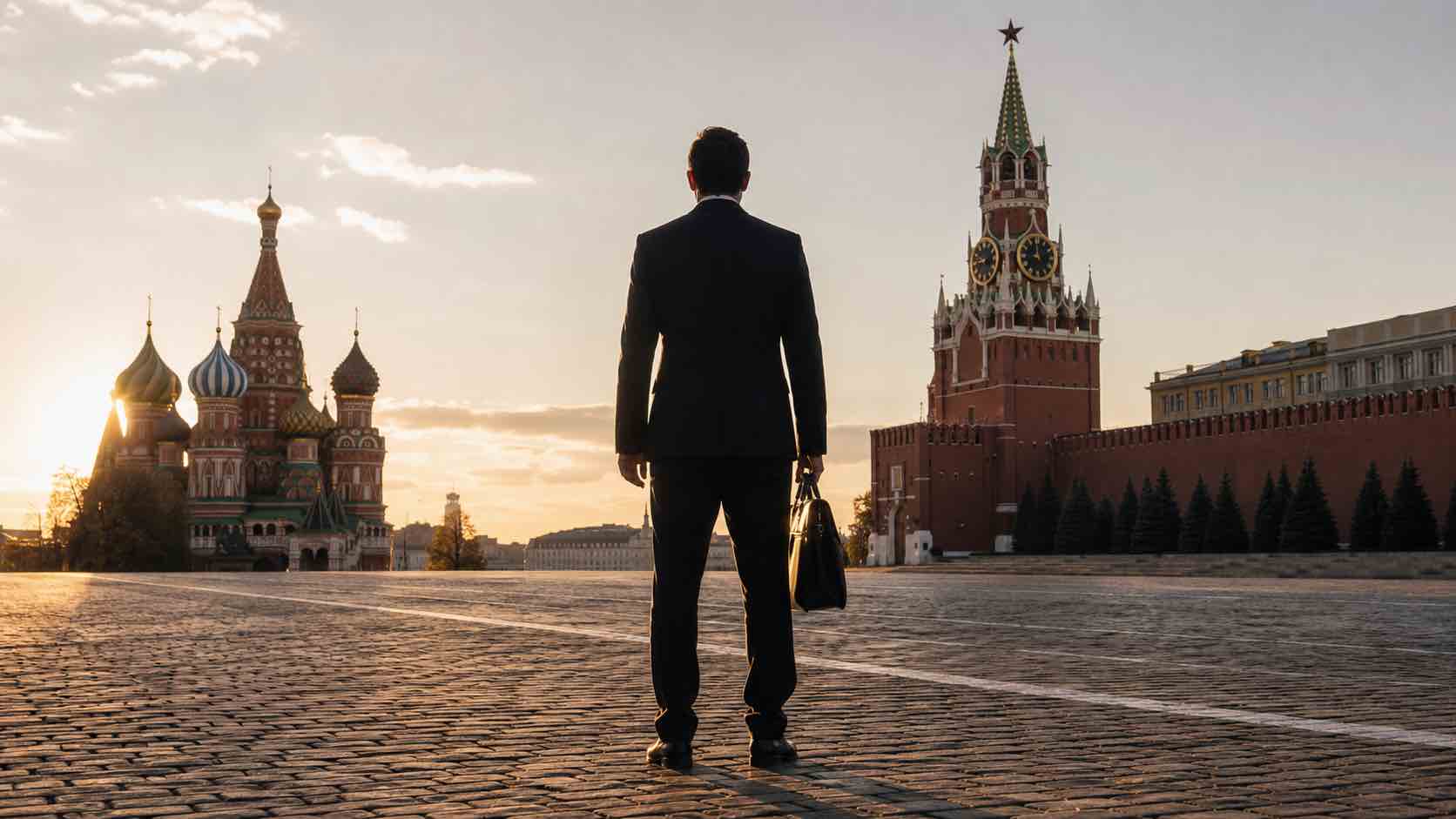
The chances of finally finding a backchannel figure capable of negotiating an end to the war in Ukraine are growing as more and more potential candidates emerge who, for various reasons, may be suitable for such a sensitive role.
There is an urgent need to find a Putin whisperer – someone the Russian president trusts, as bringing new momentum into the negotiation process to break the deadlock in the peace talks would be crucial. At the same time – and this is also key – this behind-the-scenes figure must be accepted by all parties.
This is an area where there is a complete lack of consensus, even though it is clear to everyone involved in the peace process that, U.S. Special Envoy Steve Witkoff and Jared Kushner, as an advisor on one side, and Kirill Dmitriev, head of the Russian Direct Investment Fund, on the other, cannot deliver sensitive messages to Kyiv and Moscow, as they are tasked to sit at the negotiating table and hold talks on the (pre)conditions for ending the war which, eventually, can lead to a ceasefire and a peace deal between Russia and Ukraine.
On the long list of candidates rumoured for the role of envoy, there are ex-Prime Minister of Italy Mario Draghi, former German chancellor Angela Merkel and German ex-chancellor Gerhard Schröder and even Russian oligarch Roman Abramovich. Merkel dismissed allegations about her possible involvement in peace talks. Most recently the name of Patriarch of Jerusalem Theophilos III has emerged as a possible new mediator between Ukraine and Russia. During the influential Orthodox church leader’s official visit to Washington D.C. early June, U.S. President Donald J. Trump and Theophilos reportedly discussed the creation of a dialogue channel between Kyiv and Moscow. The same sources claim that a meeting between the patriarch and Vladimir Putin is scheduled for later this month.
The problem is that serious concerns have been raised about the potential candidates named so far. (Patriarch Theophilos III is not one of them, of course.) Among them the most controversial figure is former German Chancellor Gerhard Schröder, who, according to Germany’s Europe minister, Gunther Krichbaum, had ’not necessarily demonstrated in the past that he could act as a neutral mediator’, as he was heavily influenced by Putin. EU foreign policy chief Kaja Kallas also spoke out against Schröder’s potential involvement in the Ukrainian peace talks, saying he would be ’sitting on both sides of the table’, referring to the former German leader’s close ties to Putin.
As for the possible involvement of Russian oligarch Roman Abramovich into the discussions, Ukrainian President Volodymyr Zelenskyy confirmed a meeting with Abramovich in Kyiv, adding that Putin’s well-known oligarch arrived in Ukraine at the Kremlin’s initiative and delivered a message from the Russian leader. However, this message had nothing to do with peace.
In the fifth year of the Russia-Ukraine war, after long years of holding peace talks in various countries, in various formats, but, sadly, without a concrete result, in order to effectively deliver sensitive messages to Kyiv and Moscow in person, even on a weekly basis, an influential blackchannel person and a shadow support team would be needed.
Considering that negotiations on Ukraine’s EU accession can soon be started but membership can be reality for Ukraine only if the country ends the conflict, adding that Kyiv itself is urging the EU to help negotiate an end to the war, the chances of finally finding a suitable candidate for the role, from within the EU, are pretty good.


