
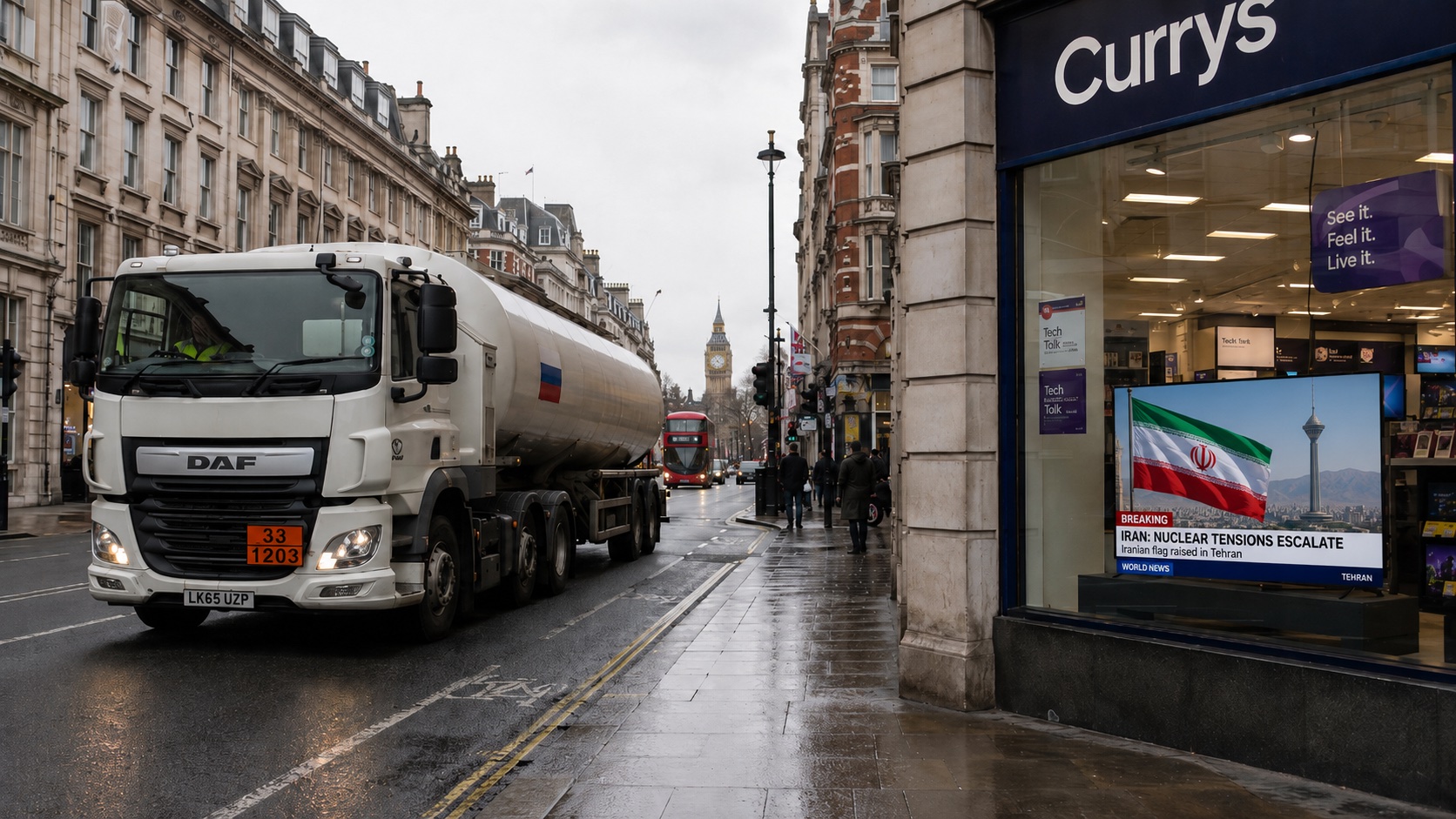
Most of Europe looks at the anti-Russian energy embargo as a historic moral obligation.
One that transformed Europe’s energy supply forever.
Theoretically, Russian oil and gas were abandoned for good. And Europe would diversify, decarbonize, and strategically emancipate itself from Moscow forever. Those who fail to see the urgency of this are ‘allies of the devil’ and ‘funding Putin’s illegal war’.
As though transforming the complete energy sector were the matter of political will alone.
Then came the Iran war.
And with it, shipping instability, fears around the Strait of Hormuz, rising fuel prices.
Thus happened that the United Kingdom — one of the loudest advocates of sanctions — quietly rediscovered pragmatism.
London’s recent decision to temporarily allow imports of diesel and jet fuel refined from Russian crude in third countries (such as India and Turkey) may sound technical.
But it was the political equivalent of a nuclear bomb, exposing the central contradiction of the entire sanction-misery.
The British easing of sanctions is the open admission that the US might be able to weather the storm (with some hiccups and a steep increase in fuel prices), but Europe still cannot fully function without Russian energy.
As long as global markets remained relatively stable, Europe could maintain the sanctions architecture while absorbing higher costs. (And with quietly importing Russian LNG through countries such as Spain, Belgium and the Netherlands.)
The moment the conflict with Iran introduced another major source of instability, the cracks in the façade became suddenly and painfully evident: the system has little to no redundancy.
Hence the latest invention of “non-Russian Russian oil”. (Or rather, re-invention, as the UK announced the ban on such products in October 2025.)
PM Starmer has repeatedly insisted that sanctions on Russian oil have not been lifted in any way.
Theoretically, the UK still maintains a ‘strong new package’ of sanctions targeting Russian economy and the prime minister has ‘reaffirmed the UK’s steadfast support for Ukraine’.
But he refused to roll back the new regulations.
Instead, Starmer apologized that the handling of the new policy was ‘clumsy’ and promised that the freshly issued licenses (that have no end date but would be reviewed regularly) will be revoked as soon as possible.
Meaning: not until energy price pressures and geopolitical tensions have been eased.
Rivals (and allies) have raised concerns that the new ‘clumsy’ ‘adjustments’ could weaken the sanctions’ effectiveness or provide indirect financial benefits to Russia. The European Commission immediately announced that it had no plans to ease sanctions on Russian energy even as ‘key G7 allies budge’.
But London insists the move is only a ‘targeted short-term’ measure meant to balance consumer needs with continued efforts to restrict Russia’s war revenues. (And quietly admits that Europe can’t remain economically competitive without relatively cheap and stable energy.)
Because moral superiority is one thing and industrial competition is a completely different one – and the reality is that energy security in Europe remains far more fragile than politicians publicly admit.
The admission is all the more painful because it comes from a country that was the staunchest supporter of the embargo regime from the beginning.


