
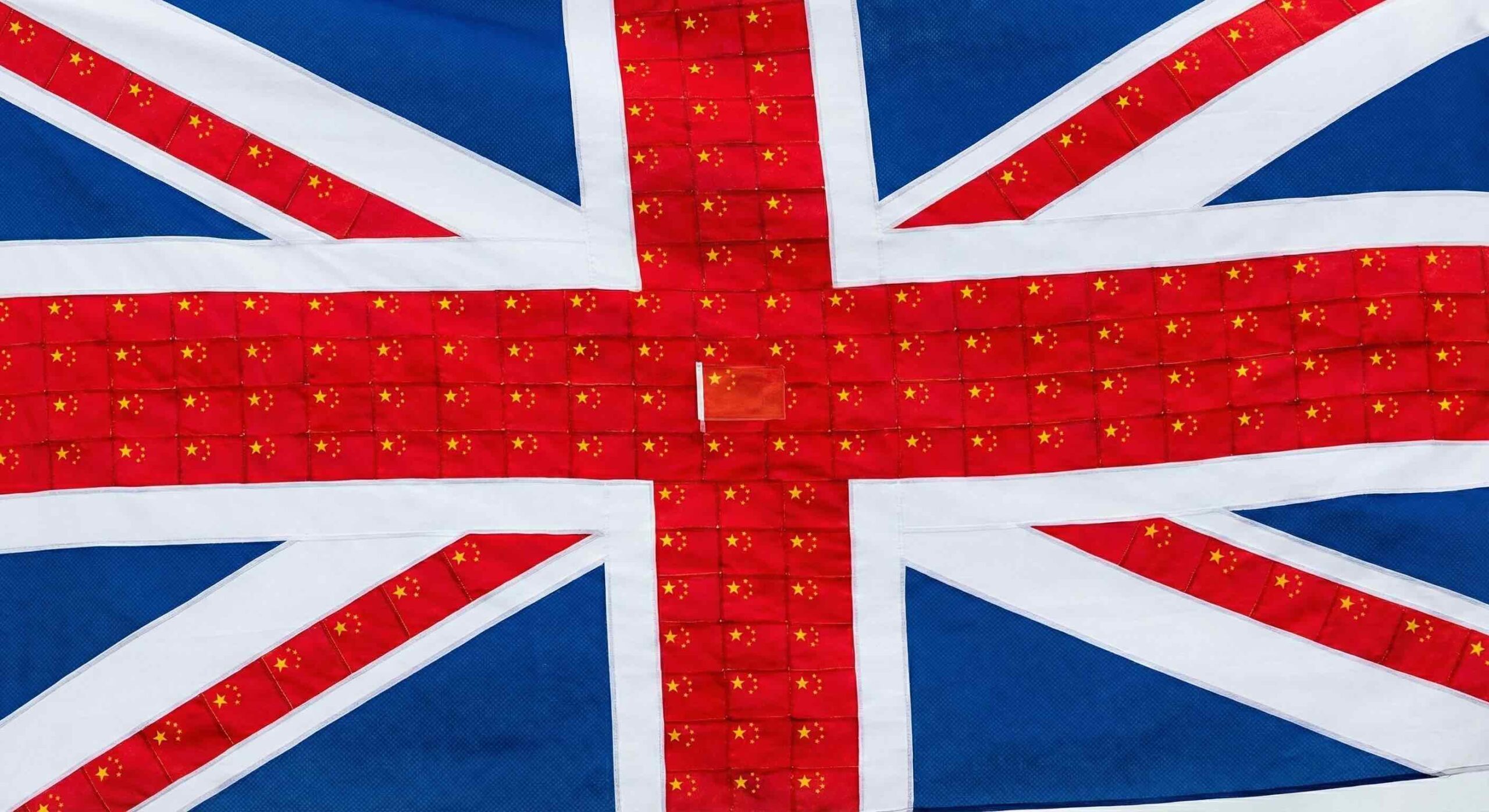
PM Keir Starmer became the first British head of government to visit China in eight years. With him went a happy little band of brothers of 60 business executives, among them leaders of HSBC, Airbus, Jaguar, London Stock Exchange Group and AstraZeneca.
Starmer met both Chinese President Xi Jinping and PM Li Qiang for high stakes discussions on trade, investment and national security. To sweeten the deal, London finally gave green light to the new Chinese embassy building, a sprawling compound in the centre of London just across the Tower of London– after seven years of diplomatic wrestling.
A string of announcements on trade and travel between the two countries rounded off the visit. According to Starmer, the UK’s relationship with China is in a ‘good, strong place’. He promoted himself as a pragmatic visionary, who wants to ‘find ways to work together in a manner which is fit for these times’, describing China as ‘one of the world’s economic powerhouses’.
When U.S. President Donald Trump warned that it was dangerous to get into business with Beijing, PM Starmer rejected the assertion, claiming ‘it would be foolhardy to simply say we will ignore China’.
Yet, Starmer was only the last among Western politicians lining up in Beijing’s door during the last months, following the footsteps of Canadian PM Mark Carney, Irish PM Micheal Martin, French President Emmanuel Macron and German Chancellor Friedrich Merz.
The diplomatic about-face is the consequence of the recent realization that Europe was too dependent on the ever-more erratic behaving Washington. That, in itself was a long overdue act.
Unfortunately, the European Union and the UK have spent the last decade pushing away Beijing, trying to build walls. Meetings on the highest levels were neglected, Beijing’s approaches were ignored and China was repeatedly declared a ‘strategic enemy’ and ‘systemic rival’ as Europe’s stance shifted from caution to confrontation.
Romulus killed Remus when he jumped over Rome’s nascent fortress – for the last couple of years, countries hoping to maintain or grow ties with China were criticised and ostracized for trying to go around the walls the European Union tried to erect.
Slovakian Prime Minister Robert Fico and Hungarian FM Peter Szijjarto, for example, both received severe criticism for their visit to Beijing just a few months ago, on the occasion of the military parade commemorating victory in World War II – while EU ambassadors in Beijing decided to boycott the event.
Starmer’s massive China-reset (though he tried to claim that it was not a tilt away from Washington) is yet another reminder of the hypocrisy of great and middle powers – the diplomatic equivalent of a slap across the face.
No wonder PM Fico accuses the EU of flip-flopping on China: the same voices that criticized his visit (calling it ‘political subservience’ and ‘megalomaniac’) now celebrate Starmer’s trip as the ‘break of the Ice Age’.
The revolving door in China is a proof of the failure of ‘value based foreign policy’: the outcome is a hurried and haphazard opening to the ‘rest of the world’ – a freshly announced trade megadeal with India and the barely finalized Mercosur agreement are two examples of this – to make up for the mistakes of the last decade and try to find friendly faces in places that were forgotten or even insulted before.


