
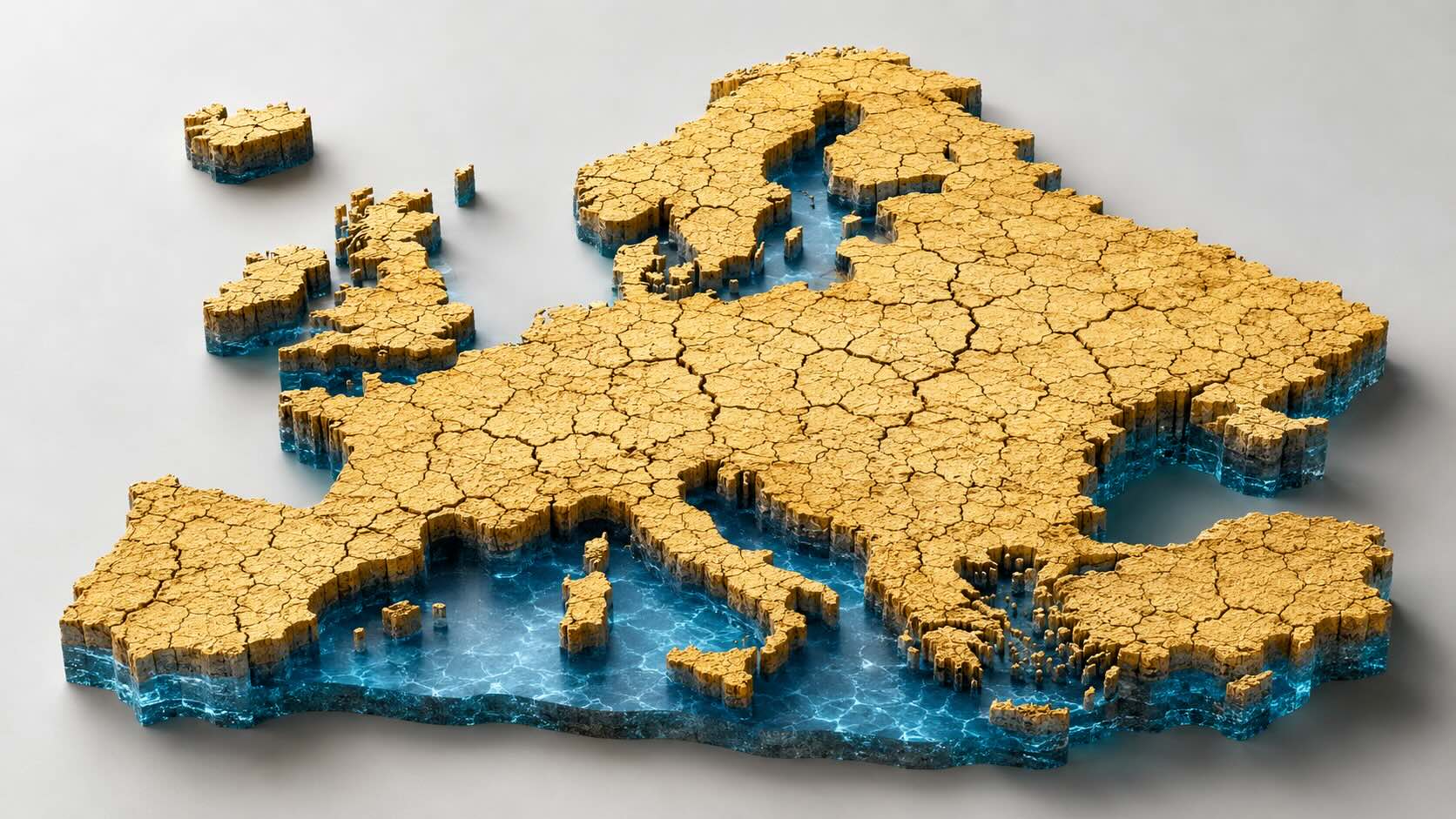
The summer of 2026 was (is) one of sweltering heat, too-warm seas, raging wildfires and extensive draught. While autumn is slowly approaching, summer’s weather still lingers on.
And there’s no guarantee that it won’t happen again – in the last few years, Mother Nature often had different ideas than the average European who only wishes to spend their well-earned holiday with relaxation and splashing around in the sea.
Climate change (with or without another Super El Nino) might rewrite many a one holiday plans, but there are far more dire consequences.
The wildfire season is not over – but it has already broken many records. The damage can be measured in billions. The draught and nearly empty river-beds might entertain enthusiastic historians and treasure seekers with long-lost items – but (nuclear) power plants are in the risk of being shut down, ships are stranded and gardens are dying.
Europe’s resilience has been tested – and a few failures have become painfully obvious.
International cooperation seems more important than ever before because no country can solve this alone. Wildfires or flash floods don’t stop at national borders, yet fight against them or their prevention is mostly done on national level. (Yes, sending firefighters from Portugal or France to Spain is a generous gesture – but it’s rather ointment on the wound than meaningful cooperation to prevent such events from happening.)
The EU can – could and should – play a vital role in the process, because it already has all the tools and mechanisms in place. And if not, it’s the best suited for the job of developing those.
Take the Interreg program, for example.
It’s been supporting cross-border, interregional and transnational cooperation projects aimed at sustainable development for decades. It is perfectly suited to “tackle shared challenges” and to “create lasting connections”, from boosting economic growth to protecting the environment.
Though citizens mostly experience the cultural and truistical aspects of it, Interreg-funded projects have provided technical, social and policy solutions for water management across the continent.
But its efforts were mostly focused on what’s visible: rivers criss-crossing the continent or lakes shared by member states. It could be easily extended to cover the invisible: underground water reservoirs. Just like rivers, those are also often shared by several member states – yet, their exploitation, monitoring and protection is in national hands.
Interreg could cover those before it’s too late to save them. Joint monitoring in the present could prevent conflicts in the future. Joint rapid response teams could provide more effective countermeasures than case-by-case solidarity gestures, let it be about wildfires or floods.
The possible uses of Interreg don’t stop at the EU’s borders – non-EU neighbouring countries are already benefiting from it across the four Interreg strands (from A to D), e.g. via the Instrument for Pre-Accession Assistance (IPA) or the Neighbourhood, Development and International Cooperation Instrument (NDICI). It’s among the most effective soft power tools the EU has to influence things happening beyond its borders.
Now that the EU’s enlargement seems to have moved forward – it is the perfect time to ensure the smooth and complete harmonization of environmental protection rules and institutional cooperation. Deeper involvement in Interreg programs could serve as the base for such dialogue.


