
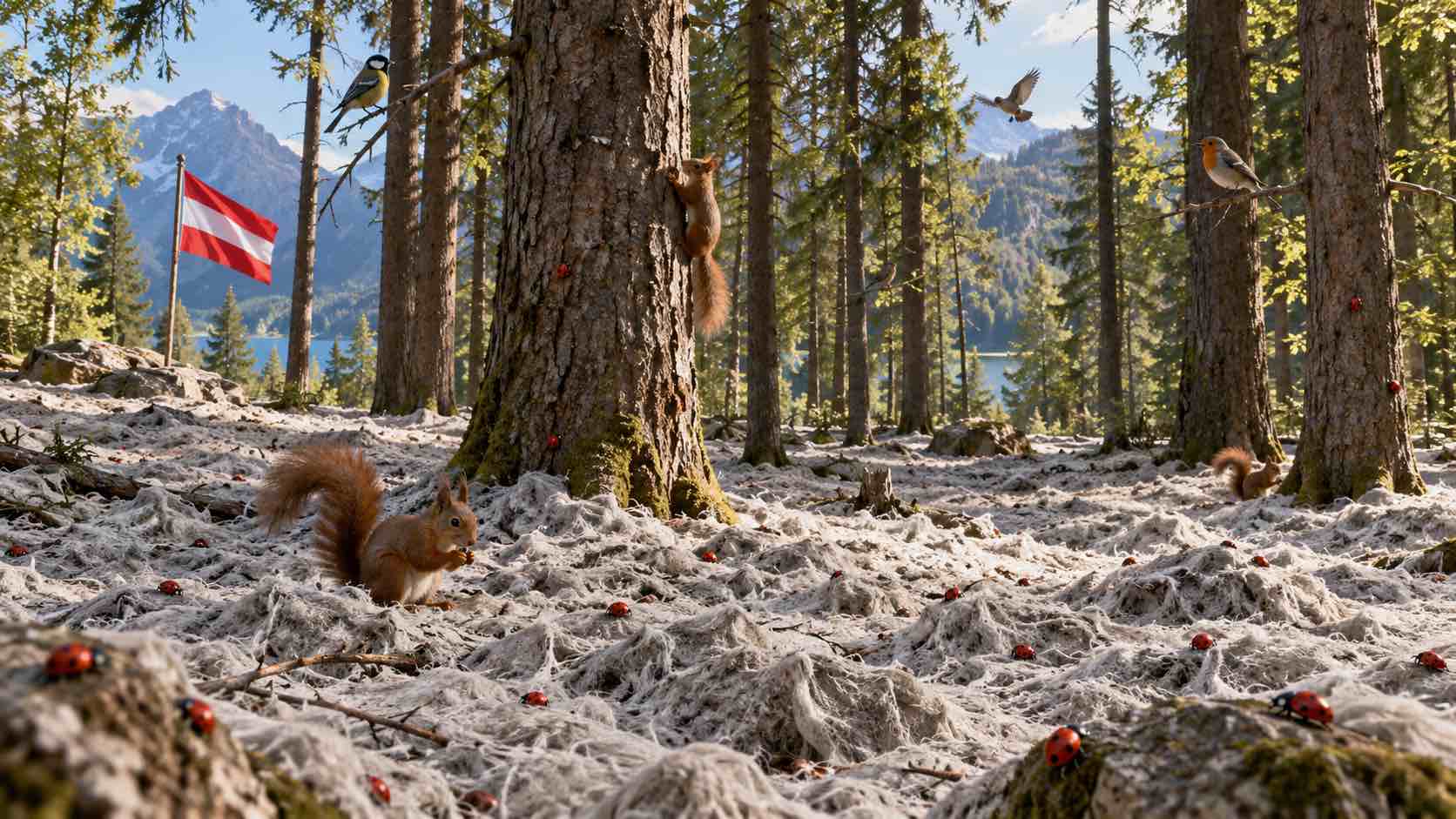
Austria is renowned for its environmental efforts and ranks strongly among its EU counterparts across multiple dimensions when it comes to “turning green”. Rather, it is generally considered a leading nation in environmental performance within the European Union.
The European Environment Agency publishes detailed country profiles on the EU’s member states. Each profile contains vital information – and Austria’s has lots of superlatives, as it lists one achievement after the other. The OECD’s Environmental Performance Review looks similar, as well.
Vienna is lauded for its results in reduction of energy use, greenhouse gas emissions, and air and water pollution. The country generates the majority of its electricity from renewable resources. It’s among the world leaders in organic farming; and protecting areas to maintain biodiversity and conservation.
While there are a few areas where there’s still room for improvement (e.g. the amount of waste produced in the country, resource circularity or curbing land take), overall, the country performs well above EU averages in environmental sector activity and climate policy investment.
One (negative) point emphasized by both of the above mentioned documents is the need for stronger governance. While Austria has comprehensive environmental legislation and a relatively good record of implementation – stakeholder engagement is low and there are persistent barriers when it comes to access to justice in environmental matters.
Much stronger cooperation would be needed (along with stronger mechanisms for horizontal and vertical co-ordination) among the several players responsible for shaping environmental policy, currently scattered on tree levels: national, state (Bundesländer) and local. As there’s often direct or indirect conflict between the different actors, “diverging priorities between federal and state levels often result in agreements with weak targets, unclear responsibilities and no enforcement mechanisms”.
One recent example of the possible catastrophes caused by this is the asbestos fibre crisis engulfing East-Austria and Hungary. By now, Vienna has also identified several areas where asbestos-containing rocks from the same mines were used.
After almost three decades of un(der)regulated (and unchecked) mining activity, the region suffers of high asbestos fibre contamination in the air. Summer and spring are worse, but according to Greenpeace Austria, there were on average 830 asbestos fibres per cubic meter in cold and wet winter weather, as well.
The potentially lethal material comes from asbestos-containing fine gravel, posing an “enormous risk to all those” who is next to them. The tiny and sharp fibres can enter the lungs, where they cause chronic inflammation and scarring.
In spite of repeated calls from Greenpeace on the Burgenland government to immediately start immediate measures, no steps were taken. Mining of the rocks (that contain natural asbestos) mining carried on for decades in spite of the warning signs that started to appear in 1994 – because of a legal loophole that excludes such rocks from the general ban on asbestos or asbestos containing products.
Even more worrying is the fact that the damage doesn’t stop at Austria’s borders. If anything, neighbouring Hungary got it worse, because it was the main export market for the involved Austrian mines for decades. By some estimates, over 26 million tons of gravel were sold to Hungarian cities and municipalities.
In a June 2026 report, Greenpeace calculated that the material damage alone will exceed at least 1.6 billion euros – exceeding the sales of the responsible quarry operators many times over. The organization concluded that Burgenland (and the affected Hungarian counties) are unlikely to be able to raise this sum alone, calling on the federal government to help.
Gaps like this in the legal framework (environmental and geological regulation) can easily create long-term liabilities that often only become visible many decades later – on occasions long after the business operations have terminated.
It’s mandatory that regulation is put in place now – one that extends compliance “far beyond production permits and ore quality” and clearly puts the responsibility on the shoulders of those causing the environmental damage.
As Austrian authorities point at each other, citing legal loopholes and missing (legal) tools for control and enforcement, the country’s reputation as the EU’s poster child for green transition got in risk.
The push for economic profit (by some estimates, the quarries involved could have earned hundreds of millions of euros in revenues) rendered prevention and environmental protection to secondary importance; both at home and beyond the country’s borders. The “leader of European green transition” cannot afford this sort of loss of credibility.


