
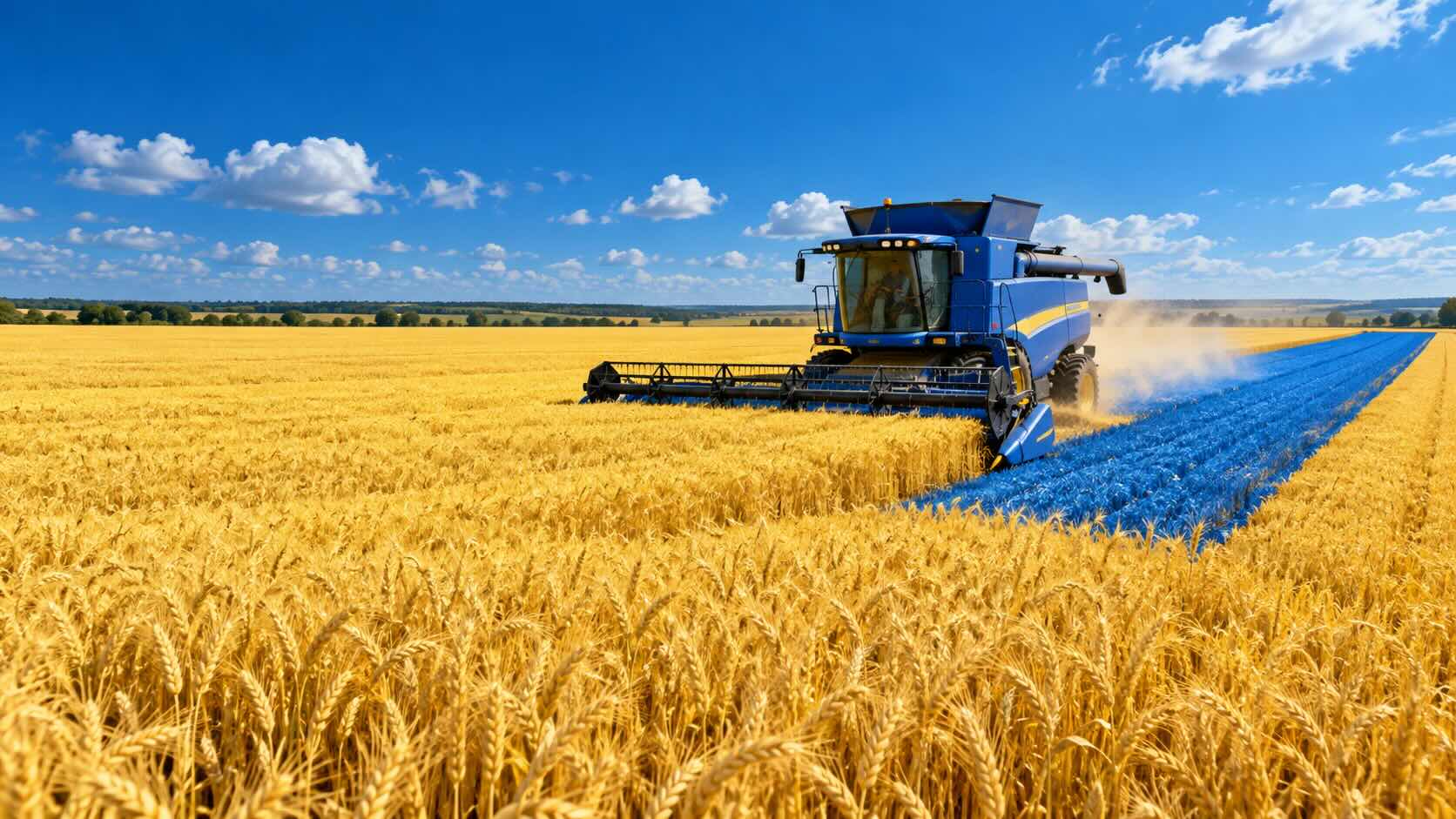
Before the start of the war, Ukraine was one of the world’s top wheat suppliers – often called the “world’s bread basket”. It exported around 20-21 million tonnes of wheat per year, valued at about $3.7 billion. Due to a wide variety of factors, these exports were heavily oriented toward Africa, the Middle East, and Asia.
With the outbreak of hostilities in 2022, Ukrainian exports collapsed – not just wheat, but also other grains, seeds, sunflower oil and poultry. And, in a sudden outpour of solidarity and desire to help, the EU scrambled to absorb as much of the excess wheat (and the other agricultural products) as possible, without giving it a second thought.
Solidarity lanes were opened, storage was offered, all duties and quotas were suspended, and market access was eased to keep the Ukrainian economy afloat.
In a way, it turned out to be the agricultural equivalent of the 2014/15 migration crisis.
One issue followed the other and the EU soon faced a severe and multi-layered problem that affected each part of the sector, from storage to transportation, and from quality control to prices.
Europe’s own farmers were struggling to stay afloat amidst the deluge of cheaper (and often lower quality or less controlled) Ukrainian products. As storage capacities were at their maximum (full of Ukrainian grain), storing Europe’s own produce became more expensive, bordering impossible.
Romania and Poland – the two countries closest to the firing line – were the first to introduce limits. Citing overloaded infrastructure and the need to protect their own farmers, both countries refused to expand transit routes or to take on additional volumes.
And both countries received heavy criticism for the step – for a while.
Beginning 2024, domestic farmer pressure grew across the continent. It started in Poland, but soon protesters blocked roads, organized strikes and increasingly violent demonstrations in every country with significant agricultural sector in order to stop Ukrainian exports.
Quotas on a few “sensitive” agricultural products were reintroduced during 2024. This eventually led to the (re)introduction of quotas on 6 June 2025 with Regulation 1132/2025 ending the temporary duty-free regime – and the silencing of the once critical voices (without admitting that they were wrong).
As the war still drags on, Kyiv tries to exert pressure on the continent – maintaining that Ukraine needs to increase the volume of agricultural products transported through Europe. It also needs funds (about €1.1 billion) to cover the logistics cost.
But protecting the EU’s own agricultural sector requires a careful approach.
The question is where the EU draws the line – now and in the case of Ukraine’s eventual EU accession.
Mandatory capping is already under discussion, but further measures would be needed to ensure that the (already significantly reduced) CAP funds are not immediately diverted from the existing member states and that Ukraine’s own food safety, water quality and environmental protection regulations are matching those of the EU.
Restrictions on the export of agricultural products or on access to the single market and CAP funds wouldn’t be without precedent: the same thing happened when Spain joined in 1986.
Romania’s and Poland’s refusal to accommodate more Ukrainian produce can serve as an example for a wider European approach. As Spanish agriculture survived the delay back then – so will the Ukrainian sector. And the EU’s own agricultural sector will have time to prepare and adjust.


